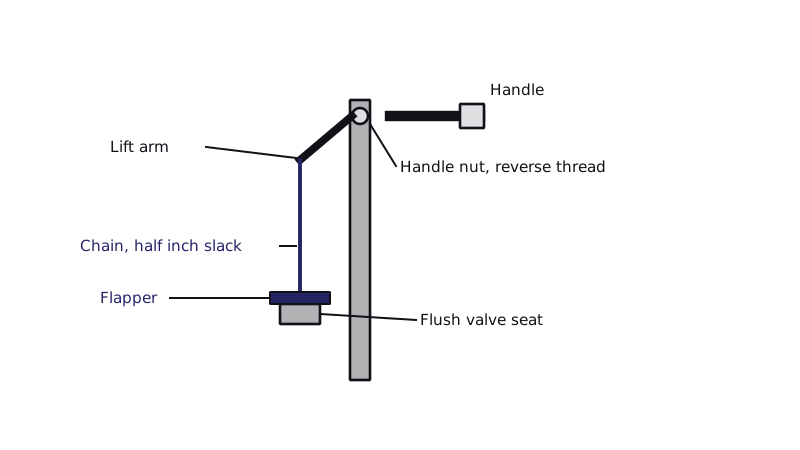
Lift the tank lid and inspect what is inside. A trickle into the overflow tube tells you either that the fill valve will not close or that the float sits too high. When the level looks normal but the tank empties and refills now and then, the flapper is leaking into the bowl. A loose handle, or a chain that is slack or tangled, shows that the flush parts are not seating. Most of these parts are cheap. The wider toilet repair section explains when to hand the job over.
Why does a toilet run without stopping?
The cause is nearly always one of four parts. A flapper that is worn or warped lets tank water seep into the bowl. A chain may be set too tightly or left too loose. A fill valve may never shut off, or a float may be raised enough for water to spill down the overflow tube. Each shows a visible sign inside the tank.
The quick way to tell them apart:
| What you see in the tank | Likely cause |
|---|---|
| Water running down the overflow tube | Float too high or fill valve failing |
| Level is below the overflow, tank refills on its own | Flapper leaking |
| Flapper held open by the chain | Chain too short or tangled |
| Hissing, no water movement you can see | Fill valve worn or a slow leak in its seal |
| Handle limp or loose | Handle nut or lift arm; see the next section |
Hard water in the Temecula area can crust flappers and fill valve seals. Rancho Water's own reports put average hardness around 230 to 240 mg/L, roughly 13 to 14 grains per gallon, in the 2020 to 2023 reports, so rubber parts here can stiffen and stop sealing sooner than people expect.
What is the way to test a toilet for leaks?
Put a few drops of food coloring into the tank, do not flush, and wait. Under EPA guidance, color showing in the bowl after 10 minutes confirms a leak. When done, flush straight away to keep the dye from staining the tank. A leak found by this method is nearly always the flapper.
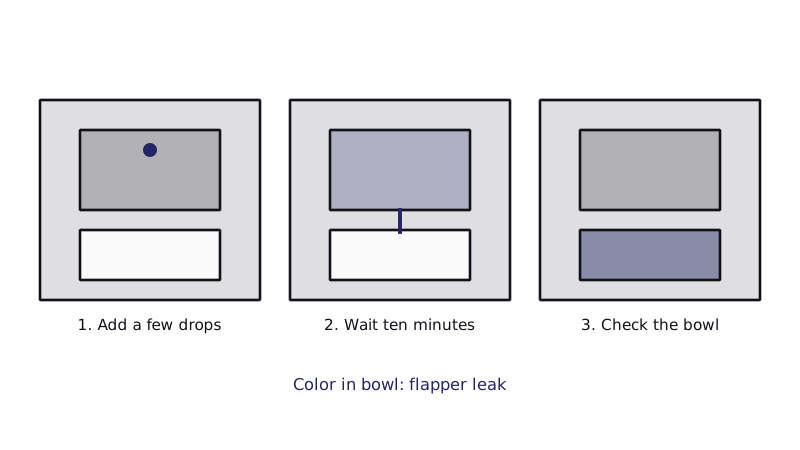
When the dye test comes back clean but you still hear water, close the supply valve behind the toilet and observe the tank. If the level holds, suspect the fill valve. If it drops, the leak is at the flapper or at the flush valve seat. Wipe the flapper seat with your fingers: a rough or slimy edge stops a good seal.
For parts guidance, read flapper repair, fill valve repair and overflow tube repair. If you are still unsure, the running toilet how-to walks the same ground from the repair side.
Can a running toilet raise my water bill?
Yes. Even with no obvious noise, a toilet that leaks into the bowl all day can squander plenty of water, and the result is often an unexplained rise in the bill. According to the EPA, leaks cost an average household more than 9,300 gallons of water a year, and toilets rank among the commonest sources.
How much it adds depends on the leak rate and how long it runs. A silent flapper leak does the most harm, as nobody hears it. Measured in water, a leaking toilet and a running toilet cost the same; only one is noisy. If the bill jumped and the toilet is just one suspect, try the meter test in the high water bill guide.
On billing matters, call Rancho Water's customer service line, 951-296-6900; if another district supplies your water, use the phone number shown on your bill. Find out whether a leak adjustment exists rather than assuming one does.
What causes a flush handle that does nothing?
A handle that moves yet flushes nothing usually points to a detached or broken chain, a loose handle nut or a cracked lift arm. The nut inside the tank has a reverse thread, so turn it counterclockwise to tighten. A slack chain means the handle needs more travel; a tight chain keeps the flapper from seating.
Set chain slack at about half an inch when the flapper is closed. Too much slack and the flush is weak; too little and the flapper stays open. For more on this specific fault, see toilet handle loose and won't flush.
Never force a handle nut. Porcelain tanks crack, and once a tank is cracked the toilet has to be replaced. Whoever you hire, a plumber a neighbor trusts or one you vetted yourself, should tell you if the toilet's age makes replacing the smarter choice; the toilet replacement cost page can help you decide.
What are the signs that a running toilet needs a plumber?
Get help if new parts do not end the running, if water reaches the floor, if the flush valve seat is pitted or the tank has a crack, or if bubbling and gurgling in other fixtures suggest a drain problem. With an old fixture, replacing a running toilet can cost less than chasing the fault.
Get help too if the water cannot be turned off at the valve, since a stuck shutoff is a hazard in an emergency. The plumber can swap the shutoff during the same visit.
Booking a visit starts on the quote page. You can also start from Temecula Pipe and Repair; describe the toilet's age, the parts already replaced and whether the water level looks normal.
Common questions
How long does fixing a running toilet take?
A plumber can often swap a flapper or fill valve in under an hour, and a careful beginner needs about the same. A cracked tank or worn flush valve seat takes longer, or means a new toilet. Once the plumber has looked inside the tank, a better estimate is possible.
What should I ask a toilet repair provider before hiring?
Ask what the visit fee includes, whether parts are covered, whether the price changes if both the flush valve and fill valve need work, and how old a toilet is still worth repairing. Also request the contractor license number so the state contractors board can verify it.
Does someone have to be home for a toilet repair?
Normally an adult is needed to unlock the bathroom, approve the price and test the flush at the end. The visit is short. If nobody can be there, mention it in your request and access can be sorted out beforehand.
Will a new flapper fix a toilet that runs by itself?
Often, when the flapper is the cause. A toilet that tops itself up every few minutes is generally leaking past the flapper, and a fresh one of the right style often cures it. If it doesn't, the seat the flapper rests on may be rough or the fill valve may be leaking.
Updated