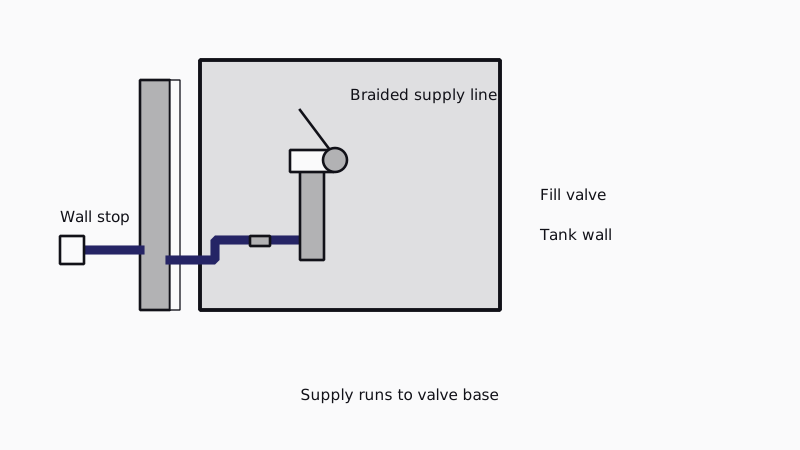
The fill valve sits in the tank, letting water in after every flush and shutting once the tank is full. When it sticks, leaks or wears out, the tank refills endlessly, hisses, or never stops running. Many homeowners swap one in about thirty minutes using a new valve and a wrench, and the toilet repair in Temecula overview explains when to hand the job over.
How can I tell the fill valve is going bad?
Listen and look. If a hiss or trickle continues long after flushing, or water keeps running into the overflow tube, the fill valve or its float is wearing out. If instead the tank level drops gradually and then refills in spurts, the flapper at the bottom is leaking. Food coloring separates the two cases.
Put a few drops of dye in the tank, do not flush, and wait ten minutes. Dye in the bowl means water is getting past the flapper or its seat, and the fill valve is only making up the loss. A clear bowl combined with a tank that keeps running, and water pouring down the overflow tube, tells you the fill valve is failing to close.
Two further hints point at the valve. A tank that fills very slowly suggests debris in the valve or a half-closed supply. A loud whine during filling can mean a worn valve or excessive water pressure. California's plumbing code limits pressure to 80 psi, and higher readings wear parts quickly. A plumber can check it with a gauge. If several fixtures fail within a year, the guide to setting a water pressure regulator is worth a look.
How do I replace a toilet fill valve?
Close the stop valve at the back of the toilet, flush the tank empty and sponge out the leftovers. Disconnect the supply line from the bottom of the fill valve, loosen the locknut under the tank and remove the old valve. Seat the new one at the height the manufacturer lists, tighten by hand plus a slight extra turn, reconnect the line and reopen the supply slowly.
Adjust the water level to sit about an inch lower than the overflow tube's upper edge, or at the mark printed on the valve. Flush several times and press a dry tissue to the connections to catch drips. A universal valve suits you if the model is unknown, and a fresh supply line is wise when the old braided one has corroded. Plastic nuts crack when overtightened, so stop early.
Sediment from hard water is a local problem. Rancho California Water District's own reports put average hardness around 230 to 240 mg/L, roughly 13 to 14 grains per gallon, in the 2020 to 2023 reports. That is very hard water. Grit and scale can clog the valve seal, so should a new valve foul again within months, have a plumber flush the supply and check the shutoff for scale. The current Consumer Confidence Report is at ranchowater.com.
The job should be quick. Stop if the shutoff valve will not close, or drips as you turn it. Water you cannot halt at the toilet is a signal to close the main shutoff and call a plumber.
How does the flapper relate, and how do I replace a flapper gasket?
A flapper seals the drain opening in the tank floor. When it wears, water leaks into the bowl and the fill valve must keep topping the tank off. Shut off the water, drain the tank, unclip the old flapper from the overflow tube ears and the chain, press on the new one, allow a bit of play in the chain, and test. Choose the right size, as two inch and three inch openings are not interchangeable.
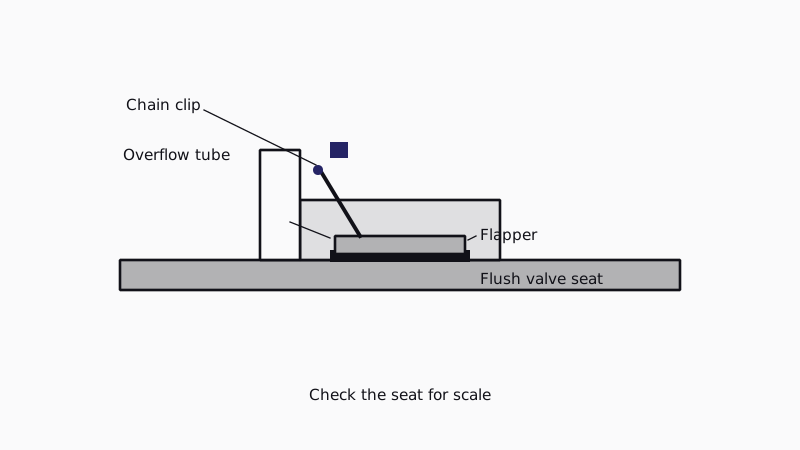
The rubber seal on many flappers hardens or warps over time, and chlorine tablets dropped in the tank speed that along. When a fresh flapper still leaks, run a finger around the flush valve seat and wipe away scale or crud. A pitted or cracked seat means the flush valve itself must be replaced, which is a bigger repair. See toilet flapper repair for photos of the common types and the chain fix for a chain pulled too tight.
A flush valve gasket is the ring that seals the flush valve against the tank. Drips from beneath the tank, around the bolts or along its base onto the floor implicate the gasket or the tank bolts, not the fill valve. Changing it means draining the tank and lifting it off.
Can a toilet cause a burst pipe, and what if a supply line fails?
A toilet does not burst a pipe on its own, though its supply line can give way. A braided hose or plastic coupling can split and flood a bathroom within minutes. Close the wall valve at once, or the main shutoff if that valve is stuck. Then mop up, run fans and photograph the damage. As a precaution, swap old supply lines every few years.
If the valve behind the toilet cannot be reached or will not hold, go to the main shutoff, which normally sits at the meter or at the point the line enters the house. Our guides on telling whether a pipe has burst and on the steps in a burst pipe emergency come next. If water got to any outlets, stay clear of the area and call an electrician or plumber as needed.
Does a running toilet raise the water bill?
Yes. A toilet that runs on, or seeps silently, can burn through plenty of water, and the bill may be the only clue. The EPA estimates the average home loses more than 9,300 gallons yearly to leaks, with toilets a frequent source. Fixing the fill valve or flapper usually costs less than the extra water.
Check the water meter with every fixture off. A dial that turns, or a low-flow indicator that moves, shows something is leaking. Then try the dye test. What else can push a bill up is covered in our page on a high water bill, and the main guide to a toilet that keeps running lists every cause. Rates and usage differ by water district, so check your own bill.
Common questions
How much time does a fill valve repair take?
A handy person can change a fill valve in thirty to sixty minutes, including draining and testing. A plumber typically finishes quickly, though the call fee often outweighs the labor time. A seized shutoff valve or corroded nuts can lengthen the job. Have a new supply line on hand in case the old one is worn.
Which questions come before hiring someone for a toilet repair?
Ask whether the quote includes the call fee, the valve and any new supply line or shutoff, and whether the flapper will be checked during the visit. Agree the price before work begins. Should you have further small jobs, like a loose seat or a dripping faucet, ask if they fit into the same visit.
Should someone be home while the plumber fixes the toilet?
Yes, since the plumber must reach the bathroom and the shutoff, and you will want to see it working before they leave. The job is short. If you cannot be there, arrange access through someone you trust, settle the price by phone first, and ask for a photo of the finished work.
Is it worth replacing a fill valve or the whole toilet?
On most toilets, a new fill valve and flapper cost far less than a new toilet and stop the running. Replace the whole toilet when the bowl or tank is cracked, the flush stays weak after repairs, or the toilet wastes water and rocks on the floor. Describe to the plumber whatever you have already attempted, so the advice stays honest.
This guide is one of many on the plumber guide for Temecula.
Updated