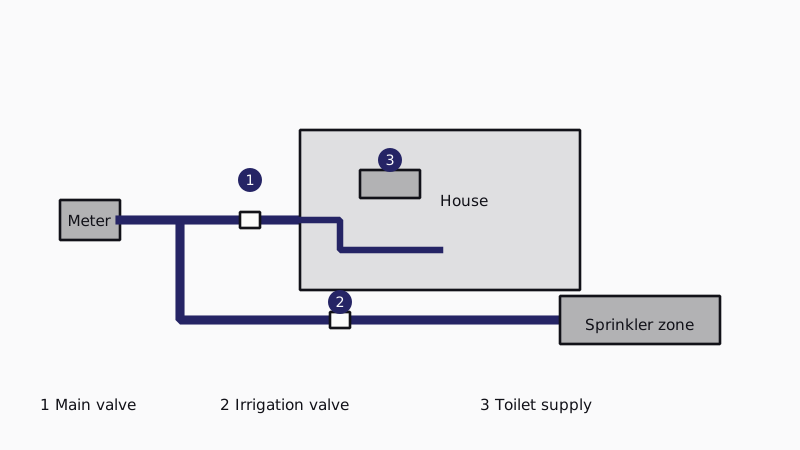
A high bill with a dry house means water is going somewhere out of sight, or that use rose without anyone noticing. Start with the water meter, because it settles the argument in two hours. If the meter moves while everything is off, you have a leak and the next job is finding which part of the line. If it doesn't, the bill reflects use or billing. Either way, you are reading a page from the leaks and burst pipes section.
Can a bill be high when I can't see a leak?
Yes, and it is common. Toilets can leak quietly into the bowl, irrigation valves can stick open, pipes under a slab or in the yard can seep into the soil, and a water heater can drip through its relief valve. Unseen losses accumulate; by the EPA's estimate, leaks cost an average household more than 9,300 gallons per year.
Visible clues often arrive late. A leak under a lawn may show only as a patch of greener grass or a soft spot. A leak beneath a slab may show only as a warm floor, a faint hiss or a damp smell. The bill is often the first sign.
Before the meter test, rule out ordinary change: guests, a new pool fill, a new lawn, a billing period that ran longer, or a seasonal shift in irrigation. Check the billing dates and the usage figure on the bill, not only the dollar amount.
How can the water meter show me a leak?
Turn off every tap, appliance and sprinkler. Record the meter reading, then wait two hours without using any water and read it once more. The EPA says any movement in the reading points to a probable leak. The small leak indicator on the meter helps as well, since it spins with even a trickle.
Next, divide the system to see which part is leaking:
- Shut the main valve where the line enters the house. Keep an eye on the meter. A meter that stops means the leak is indoors. A meter that keeps going means the break lies on the pipe run linking the meter to the house.
- Open the main and close the irrigation valve. If the meter stops, irrigation is the culprit.
- Shut the cold supply to each toilet in turn. The meter may slow when you close the leaking one.
The meter box is usually near the curb. Water district staff can help with reading a meter; Rancho California Water District's main line is 951-296-6900, and other districts print their number on the bill.
Which household sources leak most quietly?
Toilets top the list, followed by irrigation, water heaters, softeners and ice-maker or washing machine supply hoses. A worn flapper passes water into the bowl without a sound, and a stuck irrigation valve may run overnight while everyone sleeps. Each one is easy to rule out once you know to look.
Test them one by one:
- Toilets. Put some food coloring in the tank, then wait 10 minutes without flushing. Color appearing in the bowl signals a leak. Details are in toilet won't stop running.
- Irrigation. Run each zone in turn, watching for geysers, soggy spots and pooling at the valve box.
- Water heater. Inspect the floor below and the pipe that carries discharge from the relief valve.
- Softener. A stuck regeneration valve sends water down the drain; see softener and high bills.
- Hoses. Look at the fridge supply and washer connections.
Pools and spas that auto-fill can also mask a leak, because the fill valve keeps topping them up.
What if the leak is hidden beneath the slab or the yard?
If the meter still runs with the house isolated and no fixture is at fault, the leak is in a pipe you can't see. In a slab home, ask a plumber to pressure test the lines and find the spot with listening gear or thermal imaging. For a yard line, the plumber traces the run starting at the meter and ending at the house.
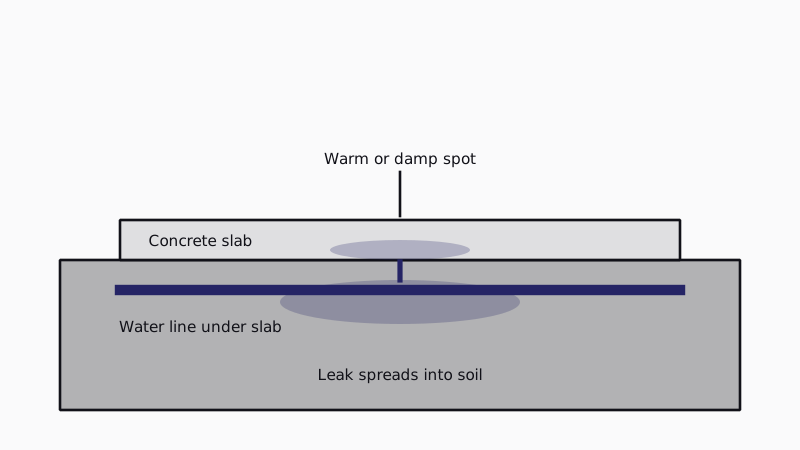
A slab or buried leak may show as a warm spot in the floor, the noise of running water, a musty smell, damp carpet edges, cracks opening in tile, and a meter that moves nonstop. The slab leak detection guide explains the process, and the page on signs of a burst pipe shows more signs.
High water pressure can aggravate small leaks and wear fittings. Read the figure with a gauge threaded onto a hose bib; a failing regulator is a common finding. See water pressure regulator replacement.
Repairs behind walls or under concrete may need a permit. In Temecula, the City of Temecula Permit Center answers on 951-694-6476 for addresses in city limits; county addresses use a different office.
What if the meter stops, but the bill is still high?
Then the water is being used, not lost. Look at the bill's usage history and compare the same months last year, check irrigation schedules, count new fixtures or household members, and check whether the billing period was longer than usual. Sprinkler controllers that reset to a default after a power cut are a classic cause.
Some districts bill in tiers, so a modest rise in use can push part of your use into a higher-priced tier. Check your own bill and your district's rate page, since we don't have a verified rate schedule for your address.
If the meter was misread, or you still can't explain a big charge, call the district and ask for a re-read and a usage history. For more cause lists, see why water bills run high.
When you want a plumber to track the leak down, use the quote page or start from Temecula Pipe and Repair, and report what the meter test showed.
Common questions
How much time does leak detection need?
A basic meter test takes two hours of waiting, and a plumber may need an hour or two on site to locate a leak on an accessible line. Slabs, long yard lines and multiple leaks take longer. A better estimate is possible once the plumber has heard your meter results.
What should I ask a leak finder before I hire one?
Find out whether the price is for locating the leak only or for repairing it as well, which methods are used, what it costs to cut into and close up a wall or to dig, and who pulls permits. Also request the contractor license number, so it can be checked online with the state contractors board.
Must I be home during leak detection?
Normally an adult should be home to give the plumber access to the rooms, the main valve and the meter. The tests need quiet, and sometimes the water must stay off for a spell. If nobody can stay, mention it in your request and we'll arrange access in advance.
Will my water district fix or credit a leak?
Districts differ. As a rule the owner pays to fix any leak between the meter and the house, and some districts may allow an adjustment after a documented repair, though we have not verified that for any Temecula-area district. Ask yours in writing, and hold on to the plumber's invoice.
Updated