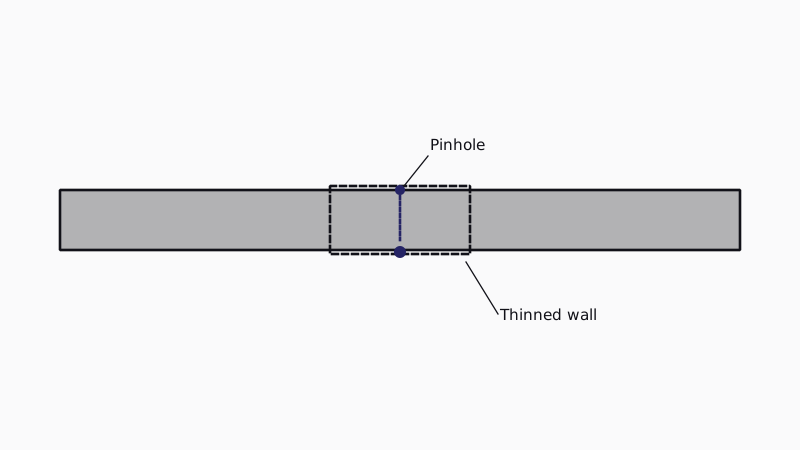
Close the water off, wipe the pipe dry and put on a temporary clamp or push-fit coupling to stop the leak. Then plan a lasting repair: cut away the damaged length and fit new copper or a proper coupling. A pinhole is often followed by others, so ask whether the whole line needs replacing. More leak advice sits on the leaks page.
How can I quickly stop a pinhole leak in copper?
Turn the water off either at the main or at the nearest shutoff, and let the line empty through a low tap. Dry the pipe off. To hold it briefly, fasten a repair clamp over the hole, or use a rubber pad held by a hose clamp; epoxy putty or self-fusing silicone tape also works. All of these are stopgaps, so schedule a permanent repair soon.
A patch exists to gain time, not to live inside a wall. Epoxy putty bonds only to clean, dry, sanded metal and does not last on a pressurized line. If water keeps spraying and no patch holds, keep the main closed and call a plumber. Where the leak is close to electrics, such as a ceiling light, panel or outlet, move to a dry spot and switch off the power at the breaker before anything else.
How do I repair the pipe permanently?
The lasting repair is to cut out the damaged section with a tubing cutter and join in new copper. Options are soldered couplings, or push-fit and press fittings, which a homeowner can use on a drained, dry line. Clean the pipe ends, deburr them, push the fitting on to its mark and test under pressure.
Soldering needs flame near wood framing and a dry pipe, and that carries a fire risk, so many plumbers use press or push-fit couplings in tight spaces. Push-fit fittings are convenient but cost more and vary by brand, so use the type rated for your pipe and pressure. After finishing, open a tap to bleed out air, restore the supply gradually, and watch the joint for several minutes. Check it once more an hour later.
What makes copper pipes develop pinholes, and does it mean more are coming?
Pinholes are tiny pits that eat through the wall of copper tube, usually from the inside. Water chemistry, high velocity, sediment, and pipe quality can all play a part. When one pinhole forms, the same conditions are probably working on the rest of the line, so a plumber might suggest a closer inspection or a repipe.
Copper installed between the 1960s and the 1990s is where these tend to show up, and thin-wall tube is more vulnerable. We do not claim any particular Temecula neighborhood has a problem. Rancho California Water District's reports put average hardness at about 230 to 240 mg/L, and hard water can leave scale and deposits in lines. After several pinholes, or a leak in a spot you cannot reach, read copper pipe versus PEX and the repipe overview. Other kinds of copper leak are covered in leaking copper water pipe repair.
How can I find where my water is leaking from?
Make sure all taps and appliances are off, and read the water meter. If the dial or low-flow indicator keeps moving, water is escaping somewhere. Then close the home's main valve. A meter that stops means the leak is indoors; one that keeps turning means it lies in the buried pipe that links the meter to the house. Next, hunt for stains, dampness, warm floor spots or hissing sounds.
A warm floor patch may mean a hot line under the slab, whereas a damp ceiling or wall suggests a supply line overhead. Press a glass or stethoscope to the wall and listen. The plumber can pinpoint a leak with acoustic and thermal tools, without opening walls. By the EPA's figures, leaks waste more than 9,300 gallons per average home each year, so a hidden one can inflate your bill. A related read is a high water bill with no visible leak.
What are the signs that a pipe has burst inside a wall?
Signs are a damp or bubbled patch of paint, a growing stain, a musty smell, running water audible when everything is off, warped baseboard or flooring, and a meter that runs. If a stain is spreading, close the main immediately. Do not cut into a wall near wiring before the power is off.
Press on the spot: drywall that feels soft is saturated. Never stand beneath a bulging ceiling, because it can come down. A small hole will drain the water into a bucket. Should a ceiling light be wet or dripping, switch off its breaker and stay clear. More on this is in our article on recognizing a burst pipe. Take photos for your insurer before you start cleanup.
How should a ceiling be dried once the leak is stopped?
Fix the leak first, then clear standing water, open up the area, and set fans and a dehumidifier running. Mold is avoided only if wet drywall and insulation dry within 24 to 48 hours; if they stay wet beyond that, take the soaked material out. Cut out sagging or soaked drywall, leave the cavity open, and check for hidden dampness with a moisture meter.
Do not paint or close up until the framing is dry. If the leak was clean water from a supply line and caught early, drying in place may work. If the water was sitting for days, or there is mold, or the ceiling is sagging, hire a water damage specialist. A small patch can be dried with a fan and heater for a few days. Large areas, old insulation and any sewage-contaminated water need professionals.
What if a pipe bursts in the yard?
Close the supply at the main, or at the valve nearest the broken stretch, and drain the line. Outside supply and irrigation lines are often PVC, polyethylene or copper. A plumber or irrigation contractor cuts out the break and joins in new pipe with a coupling, then tests. Do not guess when digging near other lines or the meter: mark them first.
Freezing is a rare cause in Temecula itself but can break exposed lines in colder places such as Aguanga, so insulate exposed pipe and drain hose bibs in a freeze. The utility is usually responsible for pipe on the street side of the meter, so phone the water district about a break there. For a plastic line, see stopping a leak in plastic pipe.
How do I repair a PVC joint that drips?
Close the water, dry off the joint and inspect it. Tape or extra cement will not seal a leaking glued PVC joint. Cut the joint out, clean the ends, and fit a new coupling with primer and solvent cement, following the label. Give the cement the stated cure time before turning the water back on.
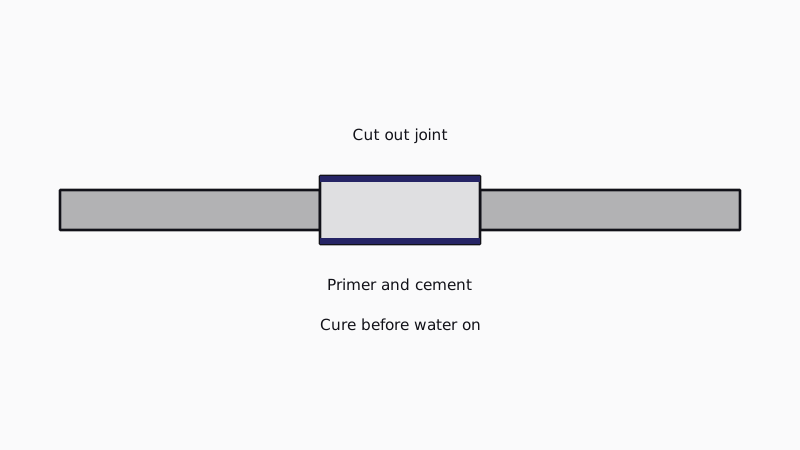
Pressure supply lines and drain lines behave differently: a drain joint that weeps only when used calls for different work than a pressurized supply joint. For a quick slip-on repair, a repair coupling can slide over the cut ends. A pipe buried under a slab or sealed in a wall means calling a plumber. Check the guide on PVC pipe leaking at a glued joint for the details.
When should a plumber take over?
Bring one in if the leak is concealed behind a wall or ceiling, a second pinhole has appeared, the shutoff will not close, the fix involves soldering or a permit, or water has reached electrical parts. California generally requires a contractor license for any job worth $1,000 or more, or any work needing a permit.
Use the quote page to send your details. The local plumbing businesses that take the requests we pass them pay us a fee, and we answer the phone Monday to Friday, 9am to 5pm. See the Temecula Pipe and Repair home page for the work we arrange.
Common questions
Can I repair a pinhole leak with epoxy?
Applied to a clean, dry, drained pipe, epoxy putty may slow a pinhole leak briefly, but it is no lasting repair on a pressurized line. Consider it a delay tactic. Afterward, remove the damaged section and install new pipe or a proper coupling.
What time does a pinhole leak repair need?
Once the water is off, replacing a short exposed length is usually an hour or two of work. If walls need to be opened, the line is under a slab or the plumber is finding the leak first, expect longer. Drying and repairing the drywall are separate steps.
Will homeowner insurance cover a pinhole leak?
Policies differ. Many cover sudden damage, but exclude gradual leaks or the pipe repair itself. Before any repairs begin, read your policy, phone your insurer, take photos and keep every receipt. Do not delay stopping the leak while waiting for an answer.
Does a pinhole leak count as urgent?
Spraying water or a spreading damp patch is urgent, as damage spreads fast. Turn off the supply and call a plumber. A slow drip that a bucket can contain with the main valve off is less urgent, but still should not be left for weeks.
What if the leak keeps coming back?
Repeated pinholes suggest the pipe is failing along its length, so repairing one spot does not fix the cause. The plumber can check both the pipe and the water pressure, and may recommend a repipe in PEX or new copper, with a permit and inspection.
Sources used
- US EPA, household leak figure of more than 9,300 gallons a year
- Rancho California Water District, water quality
- City of Temecula, Building and Safety
Updated