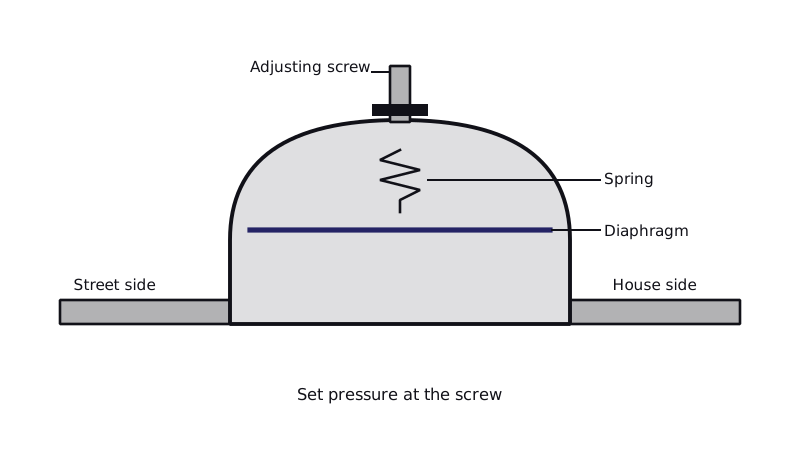
The part to find is a bell-shaped brass valve, normally sitting near the main shutoff, that lowers incoming water pressure to something the house can tolerate. When its inner spring or diaphragm tires, pressure may climb or drop. Replacing it is a mid-level plumbing job. Other pressure problems are covered on the low water pressure page.
How do I know a pressure regulator is going bad?
Warning signs are banging pipes, a toilet that refills by itself, faucets that spray or drip, discharge from the water heater's relief valve, appliances that fail early, or pressure that swings from very high to very low. Attach a gauge to an outdoor spigot to be sure. Anything over 80 psi is too high, and very low numbers suggest a stuck valve or a supply issue.
High pressure damages the hoses on washing machines and dishwashers, wears out faucet cartridges and valves, and strains joints. Many people notice only when a supply line bursts. The page on water hammer sounds covers the banging.
A weak shower does not always mean a bad regulator. Clogged aerators, scale in old pipe or a half-closed valve produce the same symptom. The page on why pressure is low goes through those.
What does replacement cost, and how do I set it up?
The price depends on the valve, the access, any pipework changes and the business doing the job; no figure is printed on this page. Ask for a written quote naming the valve model, the target pressure and whether an expansion tank is included. The installation cost page lists what drives the total.
The work is done by a local plumbing business rather than by us, and that business pays this site a fee for the request. Open the quote page and describe the symptoms, add the gauge reading if you took one, and state the age of the home. More about what we arrange is on the home page.
Regulators do not last forever. A figure of around ten to fifteen years is often quoted, but it varies with water quality, and the hard water here, with Rancho Water's reports putting average hardness around 230 to 240 mg/L in 2020 to 2023, can leave scale inside the valve.
Where is the regulator located, and whose job is it?
It sits on the main line right after the shutoff, whether in the garage, beside the water heater, on the street-facing side of the house or in a box at ground level. Some homes have none, and in certain areas the supply pressure is already under 80 psi. A valve downstream of the meter normally belongs to the homeowner, and the meter belongs to the district.
Seek out a brass bell with an adjustment screw and a locknut on top. If you cannot find one and the pressure is high, tell the plumber, as one may be missing, buried, or sitting in a meter box.
Tract homes built from the 1980s through the 2000s are old enough that factory valves may be near the end of their life, and a plumber can check the age and condition of yours.
What happens during a regulator replacement?
The plumber begins by closing the main and opening a tap to empty the line. After the old valve is cut out or unscrewed, its successor is connected with unions or with soldered, press or threaded fittings. Then the pressure is set and the plumber looks for leaks and checks the fixtures. Removing, fitting and testing generally take a few hours without water in the house.
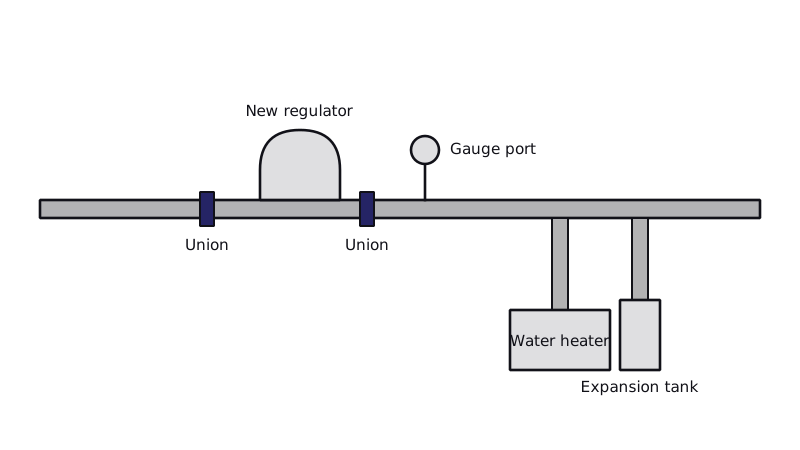
Details differ. Some replacements put in a like-for-like valve within minutes; others require pipe to be reworked because sizes or positions do not match. A valve with a built-in bypass or gauge port makes later checks easier. Size matters, so the new valve should fit the pipe diameter and the flow needs.
The expansion tank is the other item to ask about. When a valve or check device stops heated water from pushing back toward the street, the plumbing becomes a closed system and thermal expansion can raise pressure; many homes then need an expansion tank at the water heater. They are often needed, but never assume; ask the plumber.
Is a DIY regulator swap possible, and is a permit required?
A skilled DIYer can do it, but it involves cutting the main line, taking the whole house off water and getting the pressure setting right. An error can flood the home or leave the pressure unsafe. Many cities and counties count it as plumbing work that might need a permit, so check first.
Inside Temecula, the office is City of Temecula Building and Safety; unincorporated areas fall under Riverside County, and Fallbrook and Rainbow addresses under San Diego County. A contractor license is generally required in California for any permitted job, and for any work whose labor and materials add up to $1,000 or more.
To change only the setting, the guide to adjusting a regulator shows how, using a gauge and a wrench and turning the screw by quarter turns.
How can I test the water pressure at home?
Thread a pressure gauge, sold at hardware stores, onto the washing machine connection or an outdoor hose bib. Make sure nothing indoors is using water, open the spigot all the way and read the dial. Repeat the check at different hours, because street pressure changes, and watch for a needle that creeps upward when nothing is running.
Under California Plumbing Code section 608.2, 80 psi is the upper limit for pressure inside buildings, and anything above it needs a regulator. Many plumbers and manufacturers target around 50 to 60 psi at the fixtures as a comfortable setting, though you should read the guidance for your valve and fixtures.
Terrain plays a part. On hillsides, as in parts of Redhawk, pressure can differ more between neighboring streets than it does on flat tracts. Whichever supplies you, Eastern Municipal Water District or Rancho California Water District, it can state the pressure delivered in your area, and your bill shows which one it is.
Common questions
What pressure is too high inside a house?
Under the California Plumbing Code, a gauge reading above 80 psi counts as excessive, and many plumbers aim for a lower working range at the fixtures. Excess pressure wears out valves, hoses and the water heater. Read a gauge before deciding anything, and measure once more after adjusting to confirm the result.
How long does a pressure regulator last?
Roughly ten to fifteen years is the figure often cited, though it can run shorter or longer with water quality and pressure. Signs of age include creeping pressure, noise and leaks. If your home is that old and the valve has never been replaced, a check is reasonable.
Will a faulty regulator harm appliances?
Yes. Sustained high pressure can shorten the life of washing machine hoses, dishwasher valves, water heater parts and faucets. A failed regulator also passes pressure spikes through, which can make pipes bang. Appliance warranties often list a maximum pressure, so look in your manuals.
Is a regulator needed if street pressure is already low?
Not normally. If pressure already falls under the limit and fixtures work well, a regulator adds little. If pressure runs high at some hours and low at others, or the house sits below the street main, a regulator may help. A gauge reading taken across a day shows which case applies.
Updated