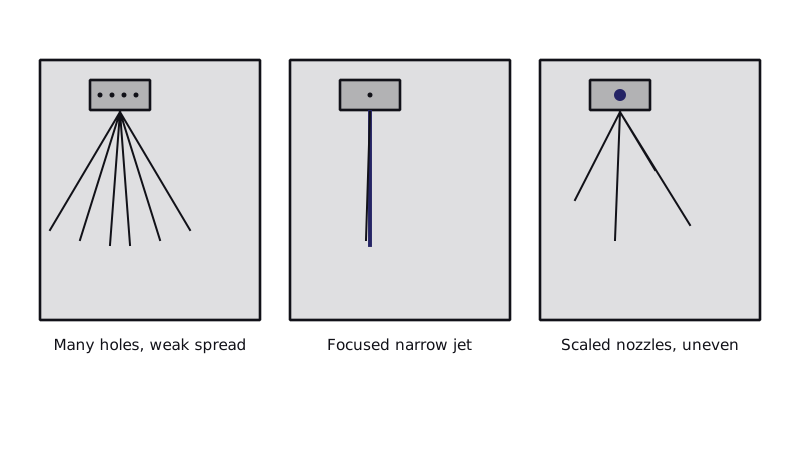
When pressure is low, pick a showerhead that squeezes the spray into a narrow, fast pattern and has a pressure-compensating or flow-regulating design, then make sure the head is not just clogged. A weak supply in the house is beyond what a new head can cure. If other fixtures are weak too, see our help with low water pressure in Temecula.
Which kind of showerhead performs best at low pressure?
Look for a head with few nozzles, a tight or adjustable spray, and a build that holds flow steady when pressure varies. Wide rain heads with many holes spread weak flow thin and feel weaker. A focused jet, or a head with an internal flow regulator, often feels stronger for the same volume of water.
The EPA WaterSense program says a labeled showerhead must use no more than 2.0 gallons per minute, compared with 2.5 for a standard one, and that labeled heads must meet a spray force requirement so the shower stays satisfying. It also says they provide a minimum flow across a range of household water pressures. That is the feature you want when your pressure is low.
Match the head to your complaint. If the stream is thin but even, a pressure-compensating head with a narrow spray helps. If it sputters or sprays sideways, the nozzles are probably scaled, and cleaning is the answer. If the tub spout flows well but the shower barely trickles, the diverter may be failing. Be wary of products promising a miracle: no head adds water that the pipes do not deliver.
Can I take out the flow restrictor to boost pressure?
We advise against it. California regulates the showerheads sold in the state, with sources citing roughly 1.8 gallons per minute, so a head without a restrictor may be illegal to sell here, and removing one wastes water and can overload a small water heater. The better fix is to find why pressure is low, or choose a head built for low flow.
Renters should check what the lease allows before changing fixtures. Owners can ask a plumber whether the restriction in the head, or a problem elsewhere in the house, is the issue. California's flow limits can change, so check the label on any head you buy for its flow rate in gallons per minute.
The restrictor is not usually the cause of a sudden change. A head that worked well and then weakened has more likely scaled or clogged, which is a quick fix. Flows that dropped overnight in the whole house need a different diagnosis.
When is a plumber better than a new showerhead?
Skip the new head and phone a plumber if weak pressure appears at several fixtures, started suddenly, comes with hammering, wet spots or a higher water bill, or involves a regulator or main shutoff that needs work. A new showerhead is a cheap first step for one weak shower, but it does not repair a supply problem.
To get help, request a quote, naming the weak fixtures and how far back the trouble goes. Pressure that vanishes suddenly while the bill climbs can mean a hidden leak, so look at your meter with everything off. See also the page on sudden low pressure in a house.
Is the showerhead to blame, or the house plumbing?
Try other fixtures. Weak flow at the kitchen sink, bathroom sink and washing machine alike places the problem in the house or the supply. If the shower is the only weak fixture, inspect the head, the diverter and the shower valve. A quick test is to remove the head and run the arm alone: a strong stream means the head is the culprit.
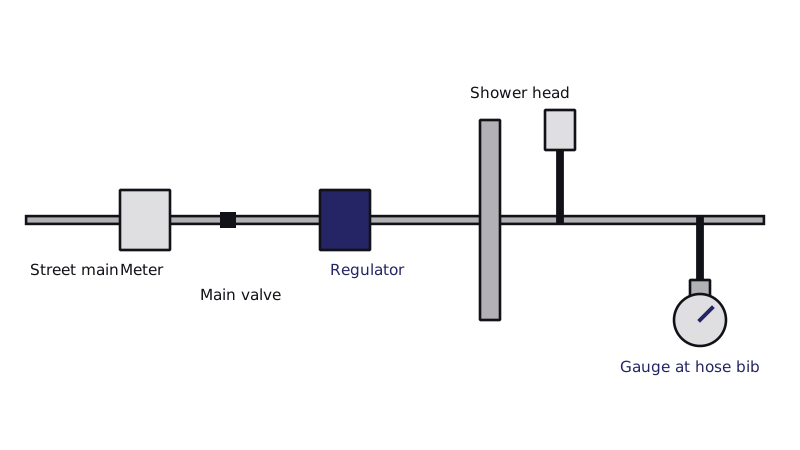
A cheap gauge from a hardware store, attached to an outdoor hose bib, gives you a figure. California's plumbing code is where the 80 psi building limit comes from, and a pressure regulator often sits close to where the supply line reaches the house. Pressure can drop because of a failing regulator, a leak, old galvanized pipe scaled inside, or a main valve that was left partly shut. Why water pressure is low walks through each, and what causes low pressure in a home covers the signs.
Appliances give clues as well. A dishwasher that fills slowly, a washing machine that takes a long time to fill and a toilet tank that refills slowly all point to a house-wide issue. An upstairs bathroom in a two-story tract home, such as those common in Redhawk and Harveston, naturally has less pressure than a ground-floor one, because height costs pressure.
Neighborhood matters too. Pressure can vary in hilly parts of Temecula and in places like Fallbrook, where elevation and long service lines affect it. Ask your water district whether there is work or a known issue on your street, and check your bill if you are unsure which district serves you. Read about adjusting a water pressure regulator before touching any valve, and see what a new regulator costs.
How do I clean a showerhead that is clogged with hard water scale?
Unscrew the head, soak it in white vinegar for a few hours, scrub the nozzles with a soft brush or a toothpick, rinse, and refit with new plumber's tape. If the head is plastic and old, replace it, since scale can be deep. Do not use harsh acids on a finish, since they can strip plating.
Temecula's water is hard. Rancho California Water District's own reports put average hardness around 230 to 240 mg/L, roughly 13 to 14 grains per gallon, in the 2020 to 2023 reports. That is very hard water, so showerheads can scale up within months, and nozzles often partly block. Check the current report at ranchowater.com. For ways to slow the scale, our guide to hard water scale prevention looks at filters and softeners.
If cleaning helps but flow drops again within weeks, have a plumber examine the whole-house water. A scaled inlet screen or a partly closed stop can also cut flow, and both are checked quickly.
Common questions
Will a pricier showerhead deliver better pressure?
Not by itself. Price pays for finish, spray options and build quality, not extra water. A head that regulates flow and focuses the spray can feel better at low pressure, and some cheaper heads do this well. Compare heads by flow rating, spray pattern and ease of cleaning, and hold onto the receipt in case it disappoints.
How long does it take to swap a showerhead?
Roughly five to ten minutes. Twist off the old head by hand, or with a cloth-wrapped wrench, wipe the threads, wind plumber's tape around the shower arm, and hand-tighten the new head. Avoid overtightening. A loose arm, or one leaking at the wall, is a stop-and-call-a-plumber sign, as the fitting behind the wall may be damaged.
Must a plumber find the cause of low pressure?
Not always. Cleaning the head, testing several fixtures and using a gauge at a hose bib are jobs you can do yourself. A plumber becomes the better choice when the cause is unclear, a regulator, main valve or pipe needs work, or a leak is suspected. A contractor license is generally required in California for any job needing a permit, or once labor and materials reach $1,000.
Will a showerhead with a pump or booster help?
Some add-on boosters exist, but we have not verified them and do not recommend a particular type. A pump on a shower line needs electrical work and adds risk, and a pressure problem at the supply is better fixed at its cause. Speak to a plumber before adding any powered device to a water line.
This guide is one of many on Temecula Pipe and Repair.
Updated