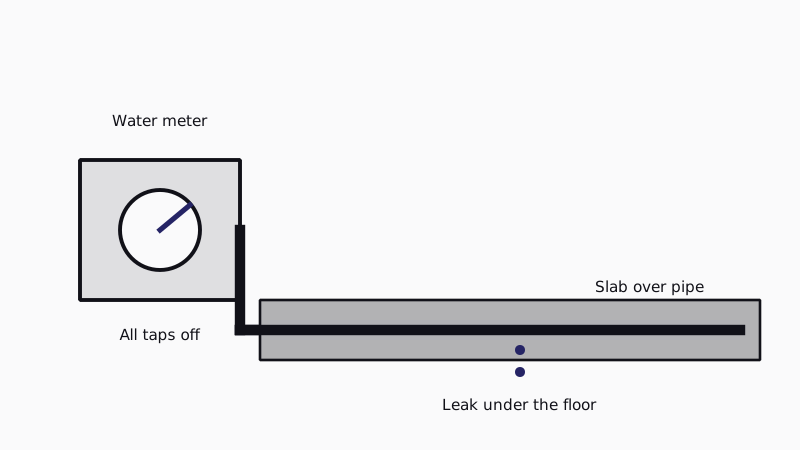
Slab leaks start when a supply pipe beneath or within a concrete foundation slab begins to leak. The break is hidden, so a plumber pinpoints it with listening gear or thermal imaging, and then repairs it by opening the slab, rerouting the pipe or lining it. They form one piece of the broader leak plumber service.
How do I know I have a slab leak?
Typical signs include the sound of running water even with everything shut off, one warm spot on the floor, damp or lifting flooring, a musty odor, new cracks in walls or tile, weaker pressure, and a rising bill although your use has not changed. Each deserves a check, and several together are a strong hint.
Start with the meter. Make sure every tap and appliance is off, then watch the meter's leak indicator, or note a reading, wait an hour and check again. If the numbers move, water is escaping. Near a water heater on the slab side, a warm patch of floor suggests a hot line leak.
Do not confuse a slab leak with surface water. A sprinkler line, a leaking toilet or a plumbing leak in a wall can mimic the signs. That is why finding the true location matters before any floor is opened.
According to the EPA, an average home leak wastes more than 9,300 gallons annually. A slab leak can go unnoticed for a long stretch, and in that time it harms the floor, the concrete and the soil beneath.
Which homes in Temecula can have slab leaks?
Any house built on a concrete slab with water lines in or under it. Many tract homes in Temecula are slab on grade, and in some, water lines run through the slab or the attic. Houses from the 1960s to 1990s may have copper that has corroded, while newer neighborhoods use different pipe, so age matters but does not decide it.
We cannot say a particular tract has slab lines. A plumber confirms what runs where by looking at the house and, if needed, locating the pipes. In homes of the Rancho California era, early copper is a common reason for slab pinholes, and hard water chemistry speeds wear.
Rancho Water's reports put average hardness around 230 to 240 mg/L, roughly 13 to 14 grains per gallon, in the 2020 to 2023 reports. Local soil and water conditions can affect copper over time, though a leak's exact cause is rarely proven without testing.
Redhawk and Harveston homes were built mostly from the late 1990s to about 2010, and many are on slabs. Should one of them develop a leak, the plumber will check whether the lines are in the slab or overhead. That answer decides which repair routes are practical.
What methods locate a slab leak?
Several methods get combined: acoustic microphones that catch the hiss, thermal imaging that reveals a warm hot-water line, pressure tests which cut off sections of pipe one at a time, and at times tracer gas or a camera. None is flawless alone, so a sound visit relies on two or more before anything is cut.
Acoustic gear works best on pressurized lines in quiet conditions. Thermal cameras help with hot line leaks. In a pressure test the hot or cold line is closed off while a gauge shows which one is losing water, and then the search narrows section by section.
Ask which method the plumber will use, and whether the spot will be marked on the floor. Mark and photograph the location before any cutting. If detection is billed apart from repair, ask what it costs and whether the same business credits it when you hire them for the work.
A false find is expensive: a hole in the slab in the wrong spot. Insist on a clear explanation of how the location was confirmed.
What are the options for slab leak repair?
Three routes exist: breaking into the slab right above the leak for a spot repair, running a new line through walls or the attic and abandoning the slab pipe, or coating the pipe from inside with epoxy. The choice hinges on the pipe's condition, access, how many leaks there are and the flooring.
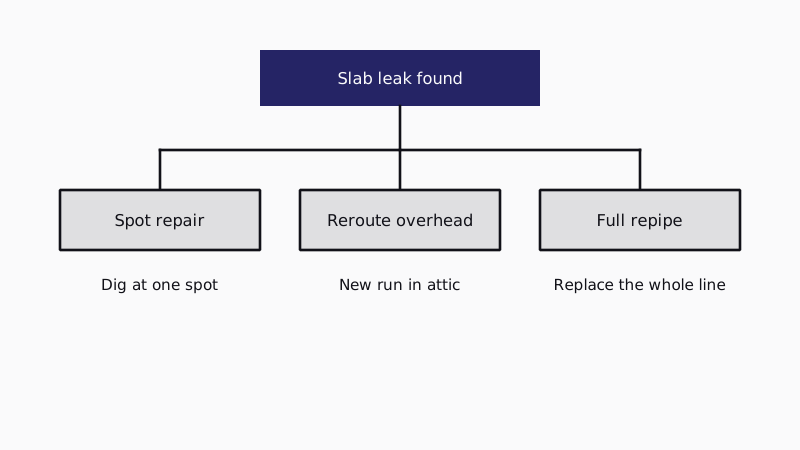
A spot repair suits one leak in a healthy line. The plumber breaks the concrete, replaces a short section and patches the slab. It is direct but messy, and floor coverings above are lost.
Rerouting is common when a line is old or leaking in several places. New pipe runs through the attic or walls, so the slab line is capped. The price is higher up front but repeated slab repairs are avoided, and the page on slab leak repair or repiping compares the two.
Pipe lining is an option in some cases; it suits some lines and not others, and results vary by condition and installer. Get the particulars in writing, such as the expected life of the coating and what the maker says.
Permits matter. Pipe replacement and rerouting can need a permit, and the City of Temecula Building and Safety counter (951-694-6439) can say how that works for an address inside the city. Beyond city limits, the job goes through San Diego County or Riverside County.
What should I expect to pay for a slab leak repair?
Price follows the time spent locating the leak, the repair route, access, floor coverings and any permit. We have no verified figure, so we publish none. Compare quotes that break out detection, repair, concrete patching, floor restoration and permit fees. The slab leak repair cost page explains the drivers.
Water damage is the other cost. Wet subfloors, ruined flooring and mold can add up faster than the plumbing. Take photos, write down dates and check your homeowner policy; some cover the damage from a sudden leak but not the pipe itself, and policies differ.
Find out in the written quote who restores flooring and drywall. Many plumbers fix the pipe and leave finishing to others, so know what is covered before you agree.
When a bigger fix is on the table, the page on repiping a house explains when replacing all the lines is worth discussing. To start a request, use the quote form. Other jobs are listed on the home page, and the guide on checking for a burst pipe helps with the first diagnosis.
Common questions
Can I fix a slab leak myself?
No. With the pipe buried in or below concrete, a repair calls for detection tools, cutting and, in many places, a permit. What you can do is turn off the water, run the meter test and keep notes. If water is flowing, shut the main valve and call a plumber.
How long does slab leak repair take?
It varies with the method. A spot repair can take a day or two including concrete work, while a reroute takes longer. Detection is usually a shorter visit. Request the timetable in writing, and remember that flooring and drywall repairs add time.
Will insurance cover a slab leak?
That depends on your policy. Many homeowners policies pay for resulting water damage from a sudden leak but may not pay to repair the pipe itself. Read your policy, ask your agent before work begins and keep photos and receipts. We cannot give insurance advice.
Is a slab leak an emergency?
Handle it as urgent. If the source is not obvious, close the main, since hidden water harms floors and foundations. With the water shut off, a plumber can track down the leak at the next available visit, which you can arrange through the quote form.
Can a slab leak cause mold?
Yes, when moisture lingers beneath flooring or inside walls. Watch for a musty odor, discolored baseboards and damp patches. Stop the leak, dry the space and have a professional assess any mold. Health advice is beyond us, so consult official guidance for a large area.
Updated