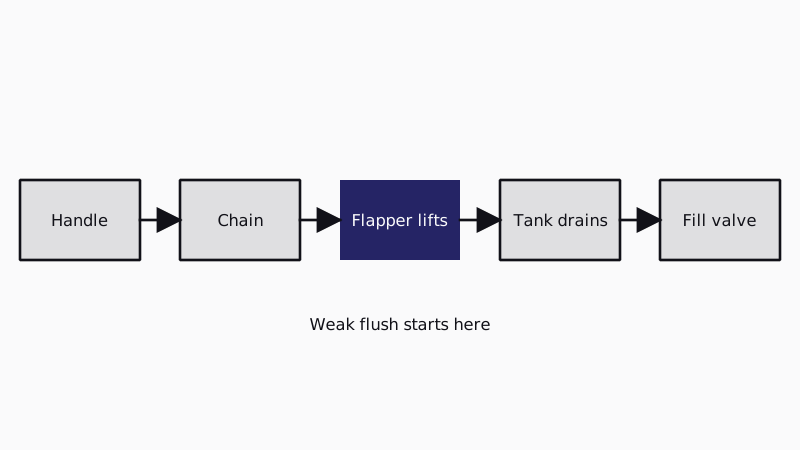
A flush is a mechanical sequence: the handle pulls a chain, the chain lifts a flapper, the tank empties through the flush valve, and the fill valve then refills it. When one link is slack or worn, the flush weakens, the handle goes dead or the toilet runs on. The wider toilet repair page covers leaks and replacement, and you can request a visit if the fix is beyond you.
What explains a weak flush, or no flush?
Check the handle first. If it moves with no resistance, the lever arm inside the tank has snapped or the chain has come loose from it. If the handle feels normal but the water barely drops, the chain may be too slack to lift the flapper fully, or the flapper is dragging on its ears. Fix those before blaming the bowl.
Work through it in this order, lid off and watching the tank:
- Press the handle while watching the flapper. It should swing wide and hold open until the tank has emptied. If it drops early, shorten the chain by one link.
- Look for a tangled chain. A chain caught beneath the flapper stops it from sealing or opening.
- Check the water level. The waterline should settle roughly an inch under the top of the overflow tube. A low level gives a thin flush.
- Inspect the rim. Tiny jets beneath the bowl rim can clog with mineral crust, leaving the wash weak even when the tank empties fine.
Water in the Temecula area is hard. Rancho Water's own reports put average hardness around 230 to 240 mg/L in the 2020 to 2023 reports, about 13 to 14 grains per gallon, so rim jets and the flush valve seat often gather scale. Check the current report at ranchowater.com.
What does the flush valve do, and when is replacement due?
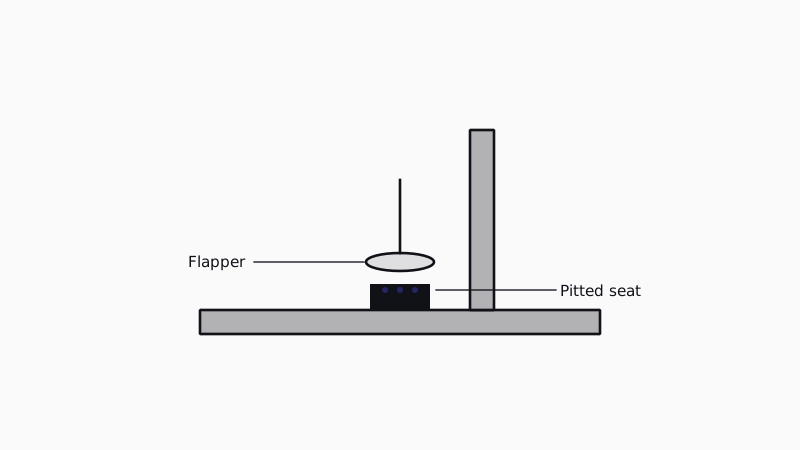
The flush valve is the large drain fitting on the floor of the tank, with an overflow tube rising from it, and it is the opening the flapper seals. Once its seat is crusted, cracked or pitted, no new flapper will seal against it, and the toilet keeps leaking. Replacement means unbolting the tank from the bowl, which makes it larger than a flapper job.
On some toilets a kit that clamps over the old valve lets you fit a replacement while leaving the tank in place. Our page on swapping a flush valve with the tank in place explains when that works. Where the tank bolts, the bowl or the porcelain have also aged, one visit can swap the valve, the gaskets and the fill valve together.
How do I deal with a toilet that runs on after flushing?
The usual culprit is a flapper not sealing, or a chain propping it open slightly. Water trickles past, and the tank is refilled over and over by the fill valve. To test it, put dye in the tank and wait ten minutes without flushing: a tinted bowl proves the flapper leaks. Flappers are rubber and stiffen with age, so a fresh one is cheap insurance.
A few other causes exist. With the float set too high, the overflow tube takes the spill, and you may hear it gurgle. A worn flush valve seat, the ring the flapper rests on, can pit and leak even with a new flapper on it. For these see the guides on a toilet running after flushing and the flapper chain.
How do I fix a loose or broken flush handle?
Take the lid off, find where the handle's arm meets the chain and see which part has failed. If the chain simply unhooked, clip it back on with about a half inch of slack. If the lever or nut is cracked, a replacement handle is a simple parts swap. The nut on the tank side is usually reverse-threaded, so turn it clockwise to loosen.
Pick a replacement handle that suits the tank mount: front, side or corner. A loose handle that wiggles but still flushes often needs only a tightened nut. Our guide to a loose handle that will not flush goes through the parts. If the handle works but the tank refills with a hiss, read the causes of a running toilet.
When does this become a job for a plumber?
Give up the DIY route if the supply valve refuses to close, water collects at the toilet's foot, the bolts have rusted solid or the porcelain shows hairline cracks. Call too if the flapper and chain were already replaced and the problem remains, because a damaged flush valve seat or hidden leak comes next. Send in a request, and it is handed to a local plumbing business.
How a visit is set up is described on the Temecula Pipe and Repair home page. A small repair visit is quick. Swapping a flush valve or fill valve typically needs an hour or two of a plumber's time, longer if the stop valve is stuck. Pricing depends on the parts and the access, and the plumber quotes it on the day. When the toilet is old and several parts have failed, the plumber may suggest replacement, and the replacement cost guide shows what to expect.
Common questions
How long does a flush repair usually take?
A chain, flapper or handle swap can be done in about 15 minutes. A fill valve or flush valve replacement needs longer, commonly one to two hours, and more when the wall valve is stuck. A plumber who brings the usual parts can often finish in a single visit.
Which questions suit a plumber visit for a toilet that won't flush?
Ask for their view of the cause, whether the price is flat or hourly, whether parts are included and whether the work might uncover other issues, such as a cracked flange or worn stop valve. A good plumber will explain the options, including repair against replacement, and give a figure in writing.
Must someone be present during the work?
Have an adult available to show the bathroom and approve the quote, since the toilet and its wall valve must be reachable for the plumber. For a rental, the tenant and the owner need to agree who authorizes the repair, so sort that out when you request the visit.
Can a toilet that flushes slowly be a drain problem?
Yes. A bowl that rises high, empties slowly and gurgles may have a half-blocked trap or drain line. That is not a tank problem, and our clogged toilets page deals with it. A plunger helps for a clog in the bowl, but repeated slow drains need a plumber.
Updated