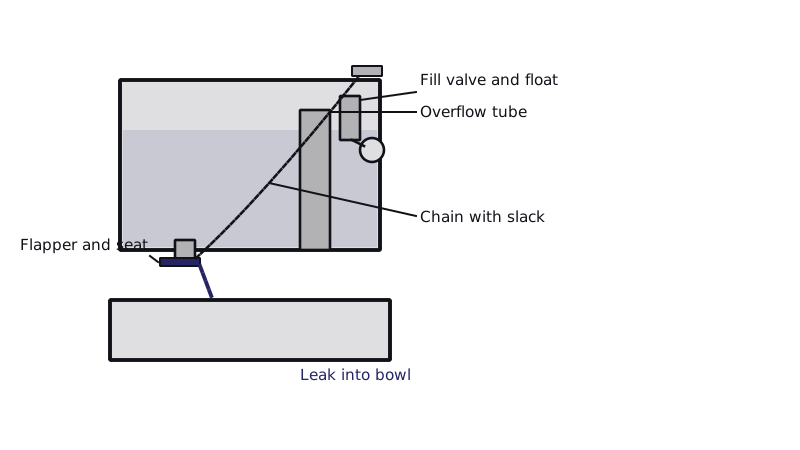
A flapper that has stopped sealing lets tank water seep into the bowl a little at a time, and that is what makes a toilet cycle by itself at short intervals. When the level falls, the fill valve opens, replenishes the tank and shuts, until the level sinks once more. The effect is often nicknamed a phantom flush. The toilet repair page covers the broader subject.
What makes a toilet tank top itself up so often?
Tank water is escaping although nobody has flushed. The flapper, which is the rubber seal on the tank floor, is worn, warped, dirty or sitting crooked on its seat, so a thin stream passes into the bowl and down the drain. The tank level falls until the float tells the fill valve to open, and the cycle begins again.
The refill interval reflects the size of the leak. Every few minutes is a leak large enough to notice; once an hour is a smaller leak of the same kind. A refill that never stops is another fault, covered under toilet water keeps running. A faint hiss between refills is described in a toilet that sounds like it is running. Occasionally the blame lies with a cracked overflow tube, a loose flush valve seal or a leaking tank bolt, but the flapper is by far the leading suspect.
What are the repair steps?
Turn off the shut-off valve at the wall, flush so the tank drains, then unclip the worn flapper from its pegs and chain. Rub the seat smooth with a cloth or a non-metal scrub pad. Fit a replacement of the same type, reattach the chain leaving some slack, then restore the water and test.
Tips that save a second trip:
- Photograph the old flapper before heading to the store, and match the type: standard 2-inch, 3-inch, or a model-specific part for dual-flush units.
- Give the chain around half an inch of slack. Tight, it keeps the flapper open; loose, it tangles.
- A pitted or chipped seat may need a seat repair ring or a new flush valve.
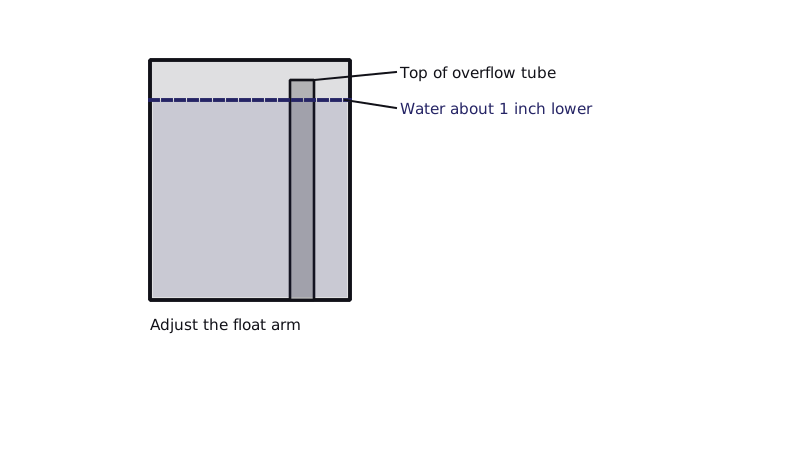
- A worn-out fill valve or badly set float can mimic the symptom, so check that the water level is about one inch beneath the top of the overflow tube.
Toilet flapper repair covers flapper models and fits, and flapper chain replacement deals with the chain.
How much water can a phantom flush waste?
Enough to show on a bill, because the leak carries on through the night. The EPA estimates that a typical household leak wastes more than 9,300 gallons yearly, and toilets are a frequent source. One that refills every few minutes loses water around the clock, unnoticed because nobody is in the bathroom.
If your meter keeps moving with all taps closed, suspect the toilet. Fix it soon, because replacement parts are cheap while the water is metered. What makes a water bill climb lists other reasons a bill rises. District rules vary, so confirm whether Eastern Municipal Water District or Rancho California Water District sends your bill, and ask about a leak adjustment after the repair.
How do I prove that the flapper is the one leaking?
Do the dye test. Remove the tank lid and drop in food coloring or a dye tablet. Do not flush, and wait ten to fifteen minutes. Tinted water in the bowl shows water passing the flapper. If the bowl stays clear, the leak is elsewhere, for instance in the fill valve or the overflow.
Steps to follow:
- Lift the lid and put it somewhere safe, since porcelain chips and cracks.
- Add the dye and leave the toilet alone.
- Look in the bowl after fifteen minutes, using a light if needed.
- If the bowl is clear, press the flapper down by hand and see whether the refilling stops. If it does, the seat or the flapper is at fault.
- Feel the flapper's edge. A slimy, soft or sticky rubber edge needs replacing.
Mineral scale plays a part. Rancho California Water District's own reports put average hardness around 230 to 240 mg/L, roughly 13 to 14 grains per gallon, in the 2020 to 2023 reports. That is very hard water, and deposits on the flapper seat can keep a good flapper from sealing, so cleaning the seat belongs in the repair.
At what stage does a plumber need to step in?
Call one if a new flapper plus a cleaned seat fail to stop it, if the flush valve or tank is cracked, if the shut-off will not close, or if water appears on the floor. Also call when the toilet is old and several parts are worn, since replacing the toilet may cost less than chasing every part.
Send a request through the quote page. We pass it on to a local plumbing business, and the businesses that accept such requests pay us a fee. The business that takes the job has its plumber quote the work before starting. Mention the age of the toilet, what you tried and the dye test result, which saves time during the visit.
Might the cause be something besides the flapper?
Yes. When a new flapper changes nothing, consider three other causes. The water level may be so high that it creeps into the overflow tube. The fill valve may fail to shut completely. Or the overflow tube may be cracked, or the base of the flush valve may leak. Each gives a different clue.
A quick way to sort them:
| What you see | Likely cause |
|---|---|
| Dye shows in the bowl | Flapper or seat |
| Water trickles into the overflow tube | Level set too high, or float stuck |
| Hissing at the fill valve between cycles | Worn fill valve seal |
| Puddle on the floor at the base | Tank bolts, wax ring or supply line |
| Tank sweats but no leak | Condensation |
For the fill valve side, read swapping out the fill valve. The toilet running fix guide has the complete diagnostic too.
Common questions
Does a toilet that runs every few minutes count as an emergency?
No. It squanders water and raises the bill, but it will not flood a room. To stop the loss until the repair, close the supply valve behind the toilet. A puddle on the floor is a separate leak, so check the supply line, wax ring and tank bolts.
Why does my toilet make a sound every ten minutes?
That sound is the fill valve refilling a tank that the flapper leaked down. It is often a brief hiss or rush of water lasting several seconds. Run the dye test. If dye reaches the bowl, fit a new flapper and wipe the seat clean; the noise should then stop.
Should I replace the flapper first, or the whole fill valve?
Start with the flapper, as it is the more likely cause and costs less. If the new flapper seals but the tank still refills at random, move on to the fill valve. Replace both only when the toilet is old, because the parts share an age and wear out together.
Is it all right to wait until the weekend?
Yes, unless you will be away. The leak is slow, and the cost of the water is modest compared with the repair. Before a trip, turn off the supply valve at the back of the toilet. If the toilet also hisses constantly or is overflowing, do not wait.
Can air in the line make a toilet run?
Air in the supply line can make a fill valve sputter or burp after the water has been off, but it will not cause a steady refill cycle. A noisy fill valve after maintenance is a separate case from a toilet that refills by itself, which is a leak. Flush a few times first to clear the air.
For the wider picture, start with plumber temecula.
Sources used
- EPA household leak figure (more than 9,300 gallons a year)
- Rancho California Water District, water quality
Updated