If water is coming through your ceiling, shut off the main water valve first, then catch the drip with a bucket and move what is underneath. Turn off the power to that room if the water is near a light or outlet. Then find where it starts. Our leak and burst pipe help page explains how a plumber traces and repairs it, and this page covers what you can do before one arrives.
What should I do first when water is coming through my ceiling?
Close the main shut-off valve, put a bucket or tub under the drip, and clear furniture, rugs and electronics out of the way. If the water is near a light fixture, switch that circuit off at the breaker panel, standing on a dry floor. Then photograph the damage, because an insurer may ask for it later.
Work through the steps in this order:
- Stop the supply. Turn the main valve off. If the leak slows or stops within a few minutes, it is a pressurized supply line.
- Contain the water. Use buckets, towels and plastic sheeting. A ceiling that bulges is holding water, so keep people and belongings out from under it.
- Protect the floors. Lift rugs and cover hardwood or laminate, since standing water spreads and seeps into seams quickly.
- Call the right person. A plumber traces and fixes the leak. If a fixture or wiring got wet, an electrician checks it before you use it again. The page on water dripping from a ceiling light covers that case in detail.
If the water is heavy and you cannot slow it, use the emergency plumber page.
Is a ceiling leak a burst pipe, and how long does it take to fix?
A pipe burst in the ceiling or the wall above it can flood a room fast, but most ceiling leaks are smaller: a fixture seal, a drain joint, a pinhole in a supply line, or a condensate line. A burst pipe repair can be quick once the water is off and the pipe is reachable. Opening walls and drying take longer.
How long it takes depends on three things:
- Access. A pipe in an open attic or under a bathroom is faster to reach than one inside a finished wall or between floors.
- The pipe. Cutting out a split section and joining new pipe is a different job from replacing a long run of old pipe.
- The damage. Drywall, insulation and flooring that got wet may need to come out, and that is separate from the plumbing repair.
Ask the plumber for a time window when you book, and expect the first visit to be mostly about finding and stopping the leak. Signs that a pipe has failed are listed in how to know if a pipe burst, and the burst pipe emergency page covers the urgent case.
How do I find where a ceiling leak is coming from?
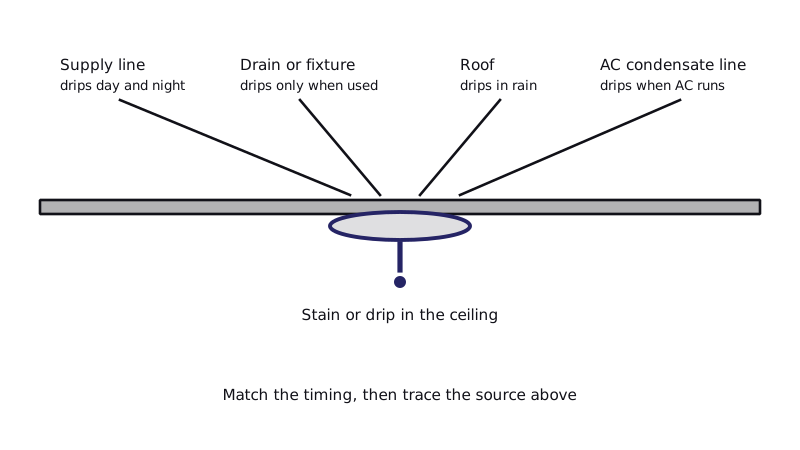
Match the timing of the drip to what is above the ceiling. A leak that only runs when someone uses the upstairs shower or toilet is a drain or fixture problem. One that runs day and night is a supply line. One that only shows in rain points to the roof, and one that follows the air conditioner points to the condensate drain.
Leak detection starts with simple checks before anyone opens a wall:
- The meter test. Turn off every tap and appliance, then watch the water meter. If the dial still moves, water is escaping somewhere in the house.
- The usage test. Have someone run one fixture upstairs while you watch the ceiling. A drip within a minute or two names the fixture.
- The shut-off test. If closing the main stops the drip, the source is a pressurized line. If it keeps dripping, the water is trapped above or comes from the roof or the AC.
Water travels along joists and pipes, so the stain is often a few feet away from the real leak. A plumber can use moisture meters and thermal cameras to narrow it down, and for slab and underground leaks there is a separate page on slab leak detection and repair.
Can I fix a pinhole leak in a copper pipe myself?
A temporary fix is possible, a permanent one is a repair job. Shut the water off, drain the line, and a clamp or a push-fit repair coupling can hold a small leak until a plumber replaces the section. Tape, epoxy and sealant sprays are stopgaps at best. Treat the pipe as failing, not fixed.
Pinholes in copper often mean the pipe wall has thinned from the inside, so other spots on the same run may be close behind. That is why a plumber usually looks at the whole run, not just the one hole. Our guide on how to repair a pinhole leak in copper pipe walks through the clamp method, and leaking copper water pipe repair explains when a section or a whole run should be replaced.
If you have had more than one pinhole, ask about replacing the line instead of patching it again. The repipe cost page explains what drives that decision.
Do leak sealant sprays work on a water pipe?
A sealant spray is not a dependable plumbing repair. Sprays and wraps may slow a very small drip for a while, but they do not restore the pipe wall, and a pressurized line can open up again. Use one only as a short bridge until a plumber can see the pipe, and never on a gas line.
The reasons plumbers do not rely on them are simple. The coating needs a clean, dry surface, and a pipe that is leaking is neither. Water pressure keeps pushing against the patch, and the weak metal around it is still weak. Our page on water pipe leak sealant goes through where a product like this can help and where it hides a bigger problem.
How much does it cost to repair a pinhole leak in a copper pipe?
The price depends on where the pipe is and how much of it has to be replaced, so there is no single honest number. A leak in an open, reachable run costs less than one inside a finished wall, and a section swap costs less than a repipe. A local plumber quotes the real price after seeing the pipe.
What moves the price up or down:
- Access. Cutting and patching drywall adds labor and finish work.
- How many leaks. One pinhole is a small repair. Several along one run usually means replacing the run.
- Pipe material and size. Copper, PEX and galvanized lines are repaired differently.
- Timing. Emergency and after-hours visits are typically priced higher.
The plumber cost page explains how local quotes are built, and the inspection cost page covers paying for a diagnosis on its own. Ask for the quote in writing before work starts.
How do I dry a ceiling after a water leak?
Stop the leak first, then dry everything completely. Open windows, run fans and a dehumidifier, and remove wet insulation and soaked ceiling material. EPA advice is to fix plumbing leaks as soon as possible and dry all items completely, because mold can start where materials stay damp.
Practical points for drying:
- Check how far it spread. Press the ceiling gently. Soft, sagging or crumbling drywall has taken in too much water to save.
- Porous materials. The EPA notes that absorbent materials such as ceiling tiles may have to be thrown away if they become moldy.
- Insulation. Wet insulation holds water against the framing, so it usually comes out.
- Size matters. The EPA says an area of mold smaller than about 10 square feet can usually be cleaned by the homeowner, and that larger areas or heavy water damage call for professional help.
Wear gloves, eye protection and a mask when handling damp, moldy material. If the water was sewage or came from a drain line, treat it as contaminated and do not handle it without protection.
How do I paint a ceiling after a water leak?
Wait until the ceiling is fully dry and the leak is repaired, then clean the area, seal the stain with a stain-blocking primer, and paint the whole ceiling panel edge to edge. Painting over a damp ceiling traps moisture and the stain comes back through.
The usual order is:
- Confirm it is dry. If the stain grows or the surface feels cool and damp, the leak is not finished.
- Repair the surface. Cut out damaged drywall, patch it, tape the seams and sand smooth.
- Prime. Use a stain-blocking primer on the patch and the old stain. Ordinary paint alone tends to let the brown ring show through.
- Paint. Roll one or two coats of ceiling paint across the full ceiling so the repair does not show as a patch.
If you are not sure the source is gone, wait a few weeks and re-check before you paint.
Why are there water marks on my ceiling but no leak?
Marks with no active drip are often an old leak that has dried, condensation, or a roof or AC leak that only runs sometimes. Brown rings that never change are usually past damage. Marks that grow, darken or feel damp are active. Check them after rain, after the AC runs and after upstairs fixtures are used.
Other causes of marks with no obvious leak:
- Condensation. Cold pipes or ducts in a warm attic can sweat and stain the ceiling below.
- A slow, intermittent leak. A drain joint that only leaks when the bathtub drains can look dry most of the day.
- Old damage. A stain from a past leak stays visible until it is primed and painted.
Mark the edge of a stain with a pencil and date it. If it grows, treat it as active and have a plumber trace it with leak detection.
When should I call a plumber?
Call a plumber when you cannot find or stop the source, when the leak comes back, when water is coming from a pipe in a wall or between floors, or when there are several pinholes. If water is near wiring, keep power off and add an electrician. We can arrange a local plumber to come to you.
To get a visit arranged, use the quote page and say where the stain is, what sits above it, and whether it drips all the time or only at certain moments. Photos of the ceiling help.
Questions people ask
Is a water stain on the ceiling an emergency?
A growing stain, a bulge, or any dripping is urgent. Turn off the main water and the power to the area, and call a plumber the same day. A dry, unchanged brown ring is not an emergency, but it should still be checked once to confirm the leak is over.
Can water damage on a ceiling make a room unsafe?
Yes. Saturated drywall can sag or drop, and water near wiring is an electrical hazard. Keep out from under a bulging ceiling, keep the power off to that area, and leave opening the ceiling to someone who can do it safely.
Does homeowner insurance cover a ceiling leak?
Often it covers sudden, accidental water damage, but the policy and the cause decide. Gradual seepage or lack of upkeep may be excluded. Take photos of the ceiling and the source, keep receipts, and tell your insurer early. Ask what to do before repairs begin.
Can I leave a small ceiling leak until later?
Not safely. A small leak still soaks insulation and wood, can feed mold and tends to get worse. Slow it with a bucket and the main valve, and have the source found soon rather than waiting for the ceiling to fail.
Will the ceiling stain come back after I paint?
It can if the ceiling was not fully dry or the stain was not primed. Fix the leak, dry the area, use a stain-blocking primer and then paint. If the stain reappears, there is probably still moisture above, and the source needs another look.
For the wider picture, start with Temecula Pipe and Repair plumber.
Sources used
Updated