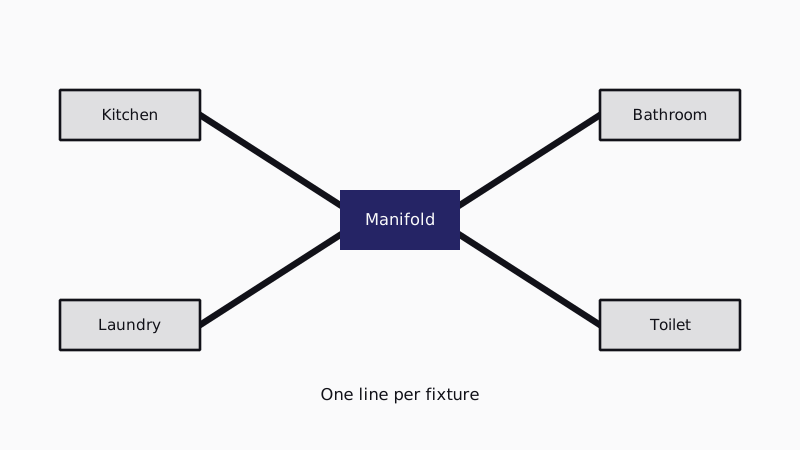
PEX is flexible plastic tubing that installs with fewer joints and goes in faster. Copper, by contrast, is a rigid metal that has been used for decades, joined with solder or fittings. Either one can serve for new water lines and whole-house repipes; which is better varies with the property and the quote.
Should a water line be PEX or copper?
Neither wins everywhere. PEX usually costs less to install, bends around corners with fewer fittings and does not corrode. Copper has a longer track record, tolerates heat and sunlight and looks rigid. On most house repipes, plumbers decide by access, budget and local conditions, and both pass code when installed correctly.
Think of it as four questions. Will the pipe run in walls and attic, or exposed? Is your water aggressive to metal? How much weight does labor carry in the quote? And which material will the installer commit in writing to stand behind? A quote naming the material and the grade shows what you are getting.
California's plumbing code allows PEX for drinking water, but local building departments inspect the work, and details are not identical everywhere. Have the plumber confirm the type is accepted, and check with the City of Temecula Building and Safety counter on 951-694-6439 if your home is inside the city.
How does Temecula's hard water treat each pipe?
Hard water scales both, yet only copper may suffer pinholes, depending on the chemistry of the supply; plastic never corrodes from the inside. Rancho Water's reports put average hardness around 230 to 240 mg/L, roughly 13 to 14 grains per gallon, in the 2020 to 2023 reports. Scale narrows fittings and valves whatever the pipe.
Some homes do have trouble with pinholes in their copper, and copper in homes of the older Rancho California tracts often prompts owners to ask about repiping. We cannot say why a given pipe failed; a plumber has to look at it.
PEX does not scale from the inside in the same way and does not pit. Its weak points are fittings and sunlight exposure, and some grades differ in how they handle chlorinated water. Ask for a grade approved for drinking water and suited to both hot and cold lines where you live, and read the maker's data sheet.
A water softener can protect both pipes and appliances. See the cost of softener installation for what drives that decision.
How much cheaper is one than the other?
PEX generally costs less in materials and labor, mostly because it needs fewer fittings and no soldering, while copper carries higher material costs and takes longer to install. Dollar figures we have not verified stay off this page. Make sure each quote states the material, the number of fixtures and any wall repair.
Costs reach beyond the pipe. Opening walls, patching drywall, painting and moving fixtures can matter as much as the tubing. A quote including patching differs from one without it, so compare the whole scope.
The pages on the cost of repiping and on PEX repipe pricing break down what makes a quote go up or down. Copper prices also move with the metal market, so a copper quote may hold only briefly. Ask for how long.
How long do PEX and copper pipes last?
Copper has a long service record, often decades, and PEX is built for long life too, but it is newer, so real-world records are shorter. Lifespans depend on water quality, installation and pressure, and any figure is a guide, not a promise. Ask the maker and the installer what they will put in writing.
Heat, sun and chemicals matter. Keep PEX out of direct sunlight, and protect it where it passes through or near hot surfaces, such as a water heater connection. Copper copes with those conditions better.
Water pressure matters for both. At fixtures, the California Plumbing Code allows no more than 80 psi (section 608.2), and a failed pressure regulator can stress any line. While the pipes are being replaced, have the regulator and the expansion tank looked at too.
Which suits older homes and which suits newer ones?
Older homes in Old Town Temecula and the Rancho California tracts often have copper, and some homes of that age may have other pipe types. Replacing with PEX is common because it threads through walls without cutting much drywall. Newer homes from the 2010s, such as Roripaugh Ranch, probably already have newer plumbing and do not need replacing yet.
Wine Country and rural parcels on wells need extra thought. Well water can be hard or acidic, and a test shows what the pipes will face. Copper is not automatically safer in aggressive water, and plastic does not automatically solve it.
Slab homes complicate it too. Lines under the slab cannot be swapped without breaking concrete, so many repipes reroute through the attic instead. When that choice comes up is explained in our guide to finding and fixing slab leaks.
Which is better, PEX-A or PEX-B, and how do fittings figure in?
The letter describes how the tubing is made. PEX-A bends more easily and can be expanded to take fittings, whereas PEX-B is stiffer and usually cheaper. Both are widely used and approved. Fitting type and installer skill affect reliability as much as the letter does.
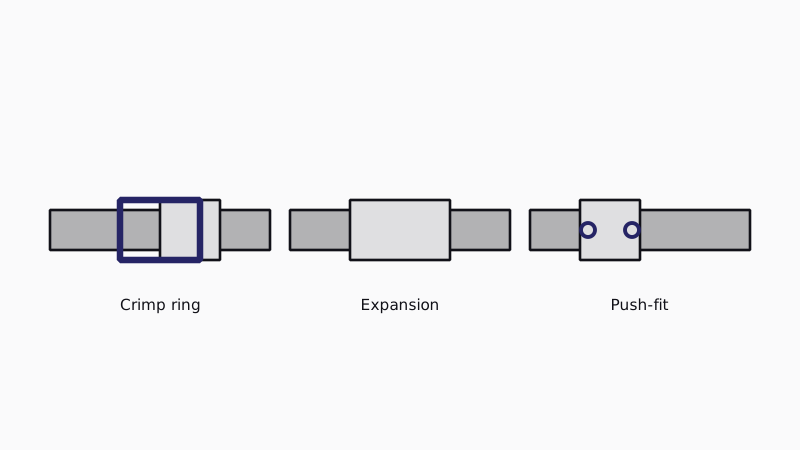
Plumbers who work with one system every day know its quirks. Ask which they use and why, and which fittings, such as crimp, clamp or expansion, will go in the walls. Keep plastic fittings out of exposed sunlight. Our longer piece on PEX A or B goes into more detail.
To get a plumber to look at your house and give a quote, fill out the quote form. You can see our other services on the home page.
Common questions
Does PEX release chemicals into drinking water?
Approved PEX is made for drinking water, and approved products are tested to standards. New tubing can give some people a plastic taste, which fades after flushing. If you have concerns, ask the installer which standard the tubing meets and check the maker's data.
Is copper safer than PEX in a fire or heat?
Copper tolerates heat better, and PEX can be damaged by high heat or direct flame. Both are used in homes under code. Installers follow the clearances around water heaters and flues, a permit inspection verifies them, and the plumber can point out where the plastic stops and the metal begins.
Can PEX freeze and burst?
PEX is more forgiving than rigid pipe because it can expand a little, but it can still be damaged, and fittings are the weak spot. Insulate exposed lines. In Aguanga and other colder spots, protect outdoor and attic runs on freezing nights and drain hoses before a cold snap.
Can I mix PEX and copper in one house?
Yes, given the right transition fittings. Many repairs join PEX to existing copper. The plumber uses approved transition fittings and keeps dissimilar metals from touching where corrosion could start. Have every transition listed on the quote, and have the plumber say which pipe stays in the walls.
Is a permit needed for a repipe?
Often, yes, because the water supply system is being replaced. Ask the plumber who will obtain the permit, and check with Temecula Building and Safety if the house is within the city. Outside the city limits, the permit office is part of San Diego County or Riverside County.
Updated