Both PEX-A and PEX-B are cross-linked polyethylene tubing used for water lines in homes, and they differ mainly in how they bend and how they connect. PEX-A is softer and takes expansion fittings, while PEX-B is firmer and takes crimp or clamp rings. For a Temecula house the real question is which suits the job, and the repiping page lays out the larger decision.
How do PEX-A and PEX-B differ?
The letters refer to the way the plastic was cross-linked during manufacture, which gives each type its feel and its fittings. The softer tubing is PEX-A, which can bounce back from kinks. PEX-B is firmer, easy to find in stores and cheaper to join. A third type, PEX-C, is less common in homes.
A short list covers the practical differences:
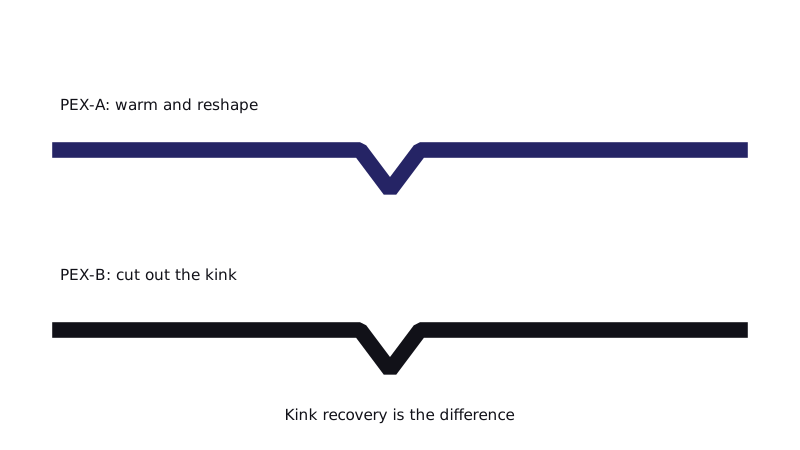
- Flexibility. PEX-A takes tight turns with fewer fittings and can recover from a kink when warmed with a heat gun. PEX-B resists tight bends, and a kink is usually cut out.
- Fittings. PEX-A is commonly joined with expansion rings, where the pipe end is widened onto a fitting and then contracts around it. PEX-B is joined with crimp or clamp rings, tools that squeeze a ring around a barbed fitting. Each system works when installed correctly.
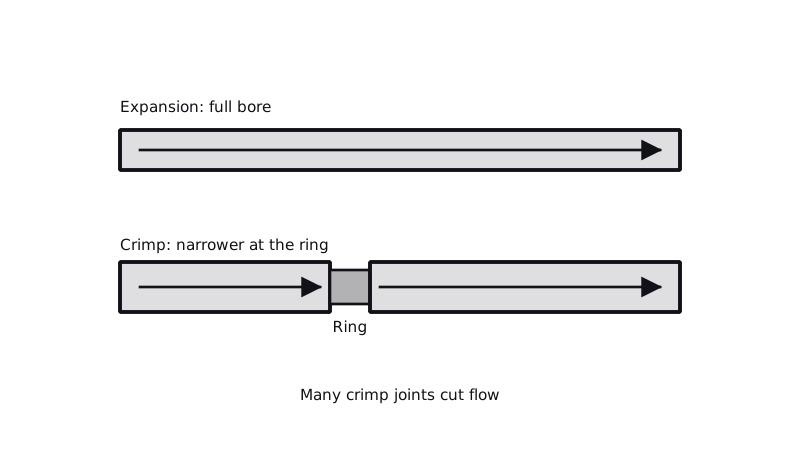
- Flow. Expansion fittings keep the pipe's full inner diameter, while crimp fittings narrow it slightly at every joint. Across a long run with many fittings, that can trim flow a little.
- Handling. PEX-A coils unwind with less memory, while PEX-B keeps more of the coil shape.
Both types meet the same plumbing product standards, and California accepts both for drinking water. A building department may add its own notes, so check with the one covering your address: Temecula Building and Safety within the city, and the county for outlying parcels.
Which type suits a whole-house repipe better?
Both do the job. A repipe sends many lines through walls and attics, so PEX-A's flexibility can cut the number of fittings and ease awkward routes, while PEX-B's lower material and tool cost can hold a quote down. The better choice is usually whichever the installer uses well, with the right fittings and proper support spacing.
Ask which system the quote is based on, the fitting type, and who stands behind the joints. A well-made crimp job on PEX-B is sound, and a poor expansion job on PEX-A is not. Good work shows up in:
- Pipe held at proper intervals, with no tight kinks.
- Fittings fully seated, with rings checked by a gauge where the system requires it.
- A manifold or trunk-and-branch layout designed for flow, not merely convenience.
- A pressure test before the walls are closed.
In Temecula, tract homes from the 1980s to the 2000s may have copper or, in some homes of that age, polybutylene, so PEX of either type is a common replacement. Slab homes often send new lines through the attic, where flexibility helps. For the matchup with copper see PEX versus copper, and for a side-by-side view see the copper versus PEX guide.
Does PEX-A cost more than PEX-B?
In general, PEX-A tubing and expansion fittings cost more than PEX-B tubing and crimp fittings, though prices shift with the store and the season. On a whole-house job the material gap is small next to labor. Most of a repipe bill is labor, so pipe type rarely decides the total.
For ranges and what drives them, the repipe house cost page draws on published guides, and the PEX repipe cost page looks at the PEX route specifically. Do not choose on price alone: a lower quote for the cheaper type may omit fixture shutoffs, wall repair or the permit.
What is their service life, and what harms them?
Unlike metal pipe, PEX does not corrode or scale up, and manufacturers publish long service lives, which are best read in their own documents instead of relying on a round number. Sunlight weakens exposed tubing, and kinks, chemicals and poor joints do harm too. Keep it covered, supported and clear of hot flues.
Points that matter in this area:
- Sunlight. PEX has a limit on UV exposure, so it must not sit uncovered on a roof or outside wall for long. Check the maker's allowance.
- Hard water. Rancho California Water District's reports put average hardness around 230 to 240 mg/L, which is very hard. PEX does not scale shut as old galvanized pipe does, but fixtures and the water heater still do, so treatment is a separate question. The hard water scale page covers it.
- Heat. Keep PEX the required distance from flues and recessed lights, and use the proper connection at the water heater.
- Freezing. PEX handles freeze expansion better than rigid pipe, but it can still fail. Higher, colder areas such as Aguanga should insulate exposed lines.
What should the permit and the quote cover?
A repipe generally requires a permit. The quote should list the pipe type, the fitting system, the fixtures included, the pressure test, wall repair and who pulls the permit. California also requires a contractor license whenever a job needs a permit. Within Temecula, Building and Safety issues the permit, while county offices cover other parcels.
Request the manufacturer's name and the product standard printed along the tubing. Save the final inspection record for a future sale. For a quote, complete the quote page with the number of stories, whether the house sits on a slab and what pipe it has now.
Common questions
Can PEX-A and PEX-B be combined in one system?
Yes, provided the fitting matches the pipe it joins. PEX-A and PEX-B share the same outside dimensions, so a crimp fitting works on either, but expansion fittings are meant for PEX-A. Mixing within one system is usually a question of fitting type rather than pipe type.
Which is stronger, PEX-A or PEX-B?
Neither wins on strength alone. PEX-B holds its shape better because it is firmer, whereas PEX-A bends more easily and can recover from a kink. Both are rated for household water pressure and temperature when joined with the correct fittings and installed according to the maker's instructions.
Does the brand of PEX make a difference?
Brand counts for less than the standard printed on the tubing and the fittings used with it. Choose a recognized product that lists the potable water standard, and keep the installer's fitting system matched to the pipe. Ask the installer what they use and the reasons for it.
Can PEX put chemicals into my drinking water?
PEX is approved for drinking water, and some people notice a smell or taste in new lines that fades after flushing. If it worries you, run the taps after the repipe and read the product's listing. Anyone with sensitivities can ask the installer about alternatives.
Is PEX allowed in Temecula houses?
California accepts PEX for water supply, and it is a common choice for repipes around Temecula. Confirm the local rules with the building department that covers your address before ordering materials, since details can vary for particular uses and fittings.
For the wider picture, start with the plumber guide for Temecula.
Updated