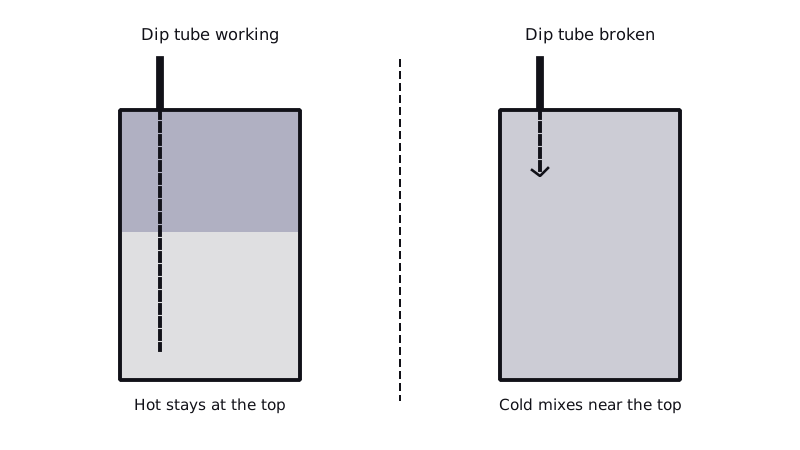
Inside a storage heater, the dip tube channels incoming cold water to the bottom of the tank, close to the burner or lower element. When the tube cracks or snaps off, the cold water enters near the top, blends with the hot layer and the outlet delivers lukewarm water. Replacement is a modest repair, and a plumber reached through the quote form can do it. This page belongs to water heater repair and explains when it applies.
The part is cheap. What costs money is the diagnosis and the work around old, scaled-up fittings, and sometimes the better choice is a new heater. Read on to judge which case you have.
What is the dip tube for?
Rather than letting cold water splash in at the top, the dip tube delivers it to the bottom of the tank. Heating happens at the bottom, so the hot water rises and collects at the top where the outlet pipe draws it off. Without the tube, incoming cold water dilutes the hot layer and the tap runs cool.
On most tank heaters the tube is a long plastic pipe threaded into or sitting inside the cold inlet fitting, usually called the heat trap nipple or the inlet nipple. It lives in a hot, mineral-heavy environment. Temecula's tap water is very hard, with Rancho Water's reports showing averages around 230 to 240 mg/L in the 2020 to 2023 reports, and that scale makes old fittings brittle and hard to unscrew. Tankless heaters have no dip tube, so none of this applies to them.
How do you know the dip tube has failed?
The main sign is water that is warm but not hot and fades faster than it should. The other is small white or colored bits of plastic collecting in faucet aerators, shower heads or washing machine screens. The heater may also seem to run constantly, since it keeps heating cold water that arrives at the wrong level.
Eliminate the easy causes first. Similar symptoms can come from a tripped breaker, a failed element in an electric unit, a low thermostat setting, a mixing valve at a fixture, or hot and cold crossing over inside a single-handle faucet. Check the thermostat before the heating parts. After that, see the guides on no hot water with a pilot light on and a cold shower. Plastic bits in the screens make the dip tube the likely culprit.
Why do dip tubes fail?
Some mid-1990s tubes made from a particular cross-linked plastic became known for crumbling, and that period produced a wave of heater complaints in the industry. Newer tubes use different material, though heat and scale still wear them. The pieces then travel through household plumbing and clog small screens.
We cannot say how many Temecula heaters carry such a tube, and a heater swapped in the last decade or so is unlikely to have one. When an older heater shows these symptoms, tell the plumber its age, and the tube can be inspected directly instead of guessed at.
Can you replace a dip tube yourself?
A confident owner can manage it, but there are risks: you handle gas or electric supplies, drain hot water, and unscrew a nipple that may be seized with scale. Begin by cutting the power or gas, closing the cold supply and draining some water. If a fitting will not budge, stop there and phone a plumber.
Risk is lowest on an electric heater with the breaker off. On a gas heater, leave the gas control and line alone. With a gas smell, walk out of the building and ring SoCalGas on 1-800-427-2200 from outdoors, or dial 911. California generally requires a contractor license for jobs of $1,000 or more and for any job needing a permit, though a small repair like this normally falls below both. Swapping the whole heater, by contrast, generally needs a permit.
What does a plumber do during the repair?
The plumber turns off power or gas and the cold supply, empties part of the tank, disconnects the cold inlet, pulls out the old tube and fits a new one, usually with a new nipple. Then the tank is refilled, air is purged from the lines, and the heater is brought back to temperature and tested.
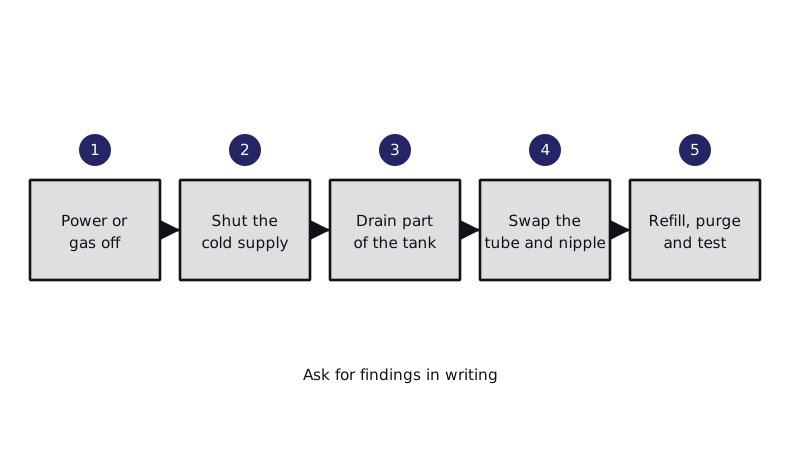
If the inlet nipple is corroded or the tank has heavy sediment, the plumber may flush the tank and recommend replacing the anode rod while the system is open; anode rod replacement covers that part. A thorough visit also checks the relief valve and discharge pipe and any signs of tank leaks. Ask for the findings in writing.
When should you replace the heater instead?
Storage heaters often last about 8 to 12 years, a commonly quoted range that varies with water and use. A heater near that age, with rust at the base or a seeping tank seam, is a weak place to spend money on a dip tube. If it is younger and otherwise sound, the tube repair is worth doing.
Compare the repair quote with the replacement figures on the page about water heater replacement costs, and use the tank versus tankless guide to judge whether a tankless unit suits your home. Swapping a heater in California typically requires a permit plus earthquake strapping. The City of Temecula Building and Safety division, 951-694-6439, can confirm the rules, and parcels outside the city answer to the county, Riverside or San Diego. The plumber usually handles the permit.
What does the repair cost, and how long does it take?
The part itself is typically inexpensive. No verified labor price for Temecula is available to us, so none is given here. Plan for a short visit, normally an hour or two with the draining and refilling included. The quote should list labor, the tube, any new fittings and the cost of flushing the tank.
Find out if any first-visit fee gets credited when you go ahead. If the plumber finds a leaking tank or rusted hardware, the conversation may turn to replacement, and the page on hot water heater tank replacement covers that route. The plumber prices page explains how hourly rates and call-out charges work.
Common questions
Is it possible for a bad dip tube to cut off hot water?
It usually causes lukewarm water, not none. A fully broken tube mixes cold water into the hot layer so the heater cannot build a hot supply, and the water seems to turn cool fast. If you get no heat at all, look at the pilot, thermostat, breaker or heating elements first.
How can I tell a dip tube fault from a heater fault?
Plastic flakes in aerators and screens point to the tube. A heater that heats normally in the first minutes then fades also fits. A faulty element or thermocouple tends to give no heat or a clear pattern. A plumber can test with a thermometer at the outlet and at the drain.
Does a tankless water heater have a dip tube?
No. Tankless units heat water on demand as it passes through a heat exchanger, so there is no storage tank to dip into. Their usual problems are scale on the exchanger, failed sensors and flow issues. The same hard water that wears a tank heater also builds up inside tankless units, so descaling matters.
Might a warranty pay for dip tube replacement?
Possibly, depending on the heater's age and terms, so check the label and paperwork for the model, serial number and any manufacturer coverage. We cannot state what any particular warranty covers. Bring the model information when you request a plumber from the home page or the quote form.
Updated