Replace the tank, not just a part, when water is leaking from the shell itself, since a corroded tank can't be patched. Also consider replacing when the heater is old, has needed repeated repairs, or no longer keeps up with the household. The work involves gas, water, venting and sometimes electrical connections, so a contractor working under a permit should handle it. This guide supports the water heater section with the details of a tank swap.
How can I tell the tank itself has failed?
Replace the whole unit when water seeps from its outer shell or base, when a hard-water-scaled tank can no longer heat enough water, or when repairs keep stacking up on an old unit. Water escaping at a fitting, valve or pipe on top is a different matter, since those parts can often be repaired without a new heater.
Look in this order:
- Water at the base. Trace it up. Dripping at the relief valve or pipe connections is a repair. Water from under the jacket is the tank.
- Rusty hot water. Rust-colored water from hot taps only often points to tank corrosion.
- Age. Read the date code printed on the label. Tank heaters commonly last around 8 to 12 years, with hard water pulling that down.
- Rumbling and scale. Popping noises and short hot-water supply suggest heavy sediment.
The leak guide for water heaters helps you sort shell leaks from fittings, and the replacement timing page covers age.
What size and type of tank should I pick?
Size the tank to the number of people likely using hot water simultaneously, then match gas or electric to what the house already uses. A 40-gallon tank is common for smaller households and a 50-gallon for larger ones, but the plumber should size from your fixtures and habits. Changing fuel type adds work and cost.
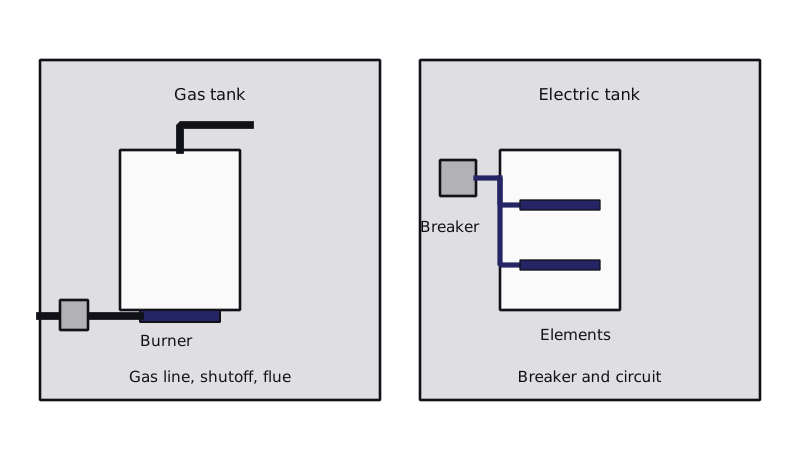
Other choices to consider:
- Recovery rate. How quickly the tank reheats.
- Venting. Gas tanks need the correct flue; a mismatch is a safety issue.
- Location. Garage, closet, attic or exterior; each has its own clearance and platform rules.
- Warranty terms. Get in writing which parts the maker stands behind and which parts the installer does.
Considering tankless instead? Read tank versus tankless first, since tankless changes gas lines, venting and cost.
Is a permit required when a water heater is replaced in Temecula?
Across California a permit is generally needed each time a water heater goes in, and an inspector checks for gas connections, venting, relief piping and strapping. In Temecula the Permit Center at 41000 Main Street issues them, and its permits line is 951-694-6476. Confirm the requirement for your address, since county addresses use a different office.
Normally the plumber handles the permit application and schedules the inspection as part of the job, so ask for that to appear in the quote. California generally requires a contractor license for work needing a permit or reaching $1,000 in labor plus materials. Request the license number and look it up on the state contractors board website.
Not all addresses with a Temecula mailing address are inside city limits. Wine Country parcels, French Valley and Winchester often lie in unincorporated Riverside County. Fallbrook, Rainbow and part of De Luz belong to San Diego County instead, and each county has its own office.
How does hard water change my choice of replacement?
Hard water leaves scale across the tank bottom, elements and burners, which lowers efficiency and shortens service life. Rancho Water's reports put average hardness around 230 to 240 mg/L, roughly 13 to 14 grains per gallon, in the 2020 to 2023 reports. A new tank lasts longer if you flush it yearly and check the anode rod.
An anode rod is a piece of sacrificial metal; it rusts away in place of the tank wall. In scale-prone water it wears faster, and replacing it extends tank life. The anode rod guide explains how, and the scale prevention page covers softening.
When you are ready, Temecula Pipe and Repair can send your request on to a local plumbing business, which offers a visit along with a written quote. Include the age of the heater, its fuel type and its location when you use the quote page.
What happens during a tank replacement?
First the plumber shuts off the supply of water and fuel, then drains and removes the old tank, then places the new unit on its stand or pan. Water, gas or electric, venting and the discharge line from the pressure relief valve are reconnected. The unit is filled, checked for leaks, lit or powered, and tested. A permit inspection then confirms it.
Details worth watching for in the quote:
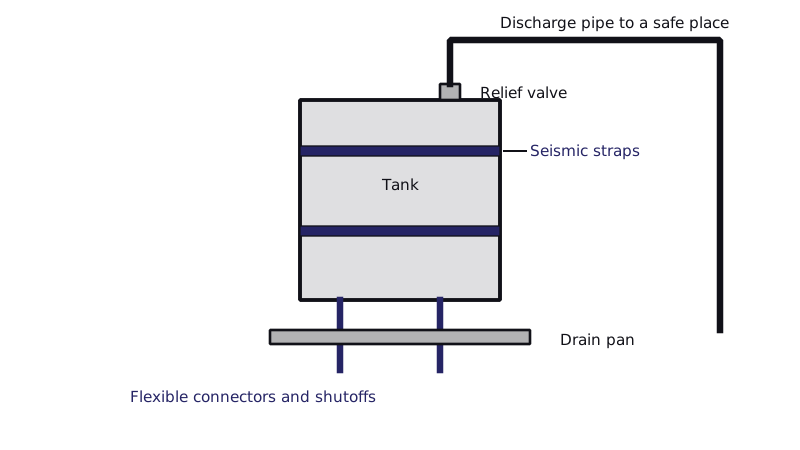
- Seismic strapping. California requires heaters to be strapped against quakes, so straps belong on the quote.
- New flex connectors and shutoffs. Old ones are replaced, not reused.
- Relief valve and discharge pipe. Discharge has to end somewhere safe.
- Expansion tank. Closed plumbing systems often need one, although code does not demand it in every case, so ask why it is on the quote.
- Gas connection. A gas line is only touched by a contractor, with a leak check afterward.
- Haul-away. Who removes the old tank?
A like-for-like swap usually takes a few hours, and the visit runs longer when venting, a stand or a gas line changes.
Common questions
How long does replacing a tank take?
A direct swap of the same kind of heater takes a few hours. Relocating the unit, changing venting, upsizing a gas line or adding a pan and drain can turn it into a longer visit, and the permit inspection comes after. You will have no hot water during the work, so ask the plumber how long to plan for.
Which questions should I put to a plumber before accepting a tank replacement?
Request a written quote listing each of these separately: the unit, labor, permit, strapping, new connectors, relief valve piping, an expansion tank if needed, and haul-away. Find out who pulls the permit, plus the warranty coverage and its length. Obtain the contractor license number too, and confirm it with the state.
Must I be home during the replacement?
Usually an adult should be on hand to provide access, approve the price and watch for the first hot water at the end. The work happens in a utility area, so you needn't stay beside it. If nobody can be present, mention that in your request and we'll arrange it in advance.
Can I replace a tank water heater myself?
California law treats water heater replacement as permitted work, and gas, venting and electrical connections carry real risks. A mistake can mean carbon monoxide, a gas leak or a scald. A contractor with a permit is the safer and, for gas heaters, the expected route. Ask the Permit Center what applies to your address.
Updated