Poor drainage does not always mean a clog in the sink pipe itself. The usual reasons are a blocked plumbing vent that stops air entering the drain, grease lining the pipe further down, a jammed disposal or dishwasher hose, or a partly blocked branch or main line shared with other fixtures. Fixture-level help is on the page for clogs and drain problems.
What slows a kitchen sink when nothing is stuck in it?
The blockage is probably further along the line than a plunger can reach. A partial restriction in the branch, a blocked vent or a disposal with a stuck flapper all slow the flow without stopping it. Over the years, grease and soap scum build up inside the pipe and narrow it.
Picture the drain as a pipe that needs air behind the water. Without air, water glugs and slows, like a bottle held upside down. Walk through the likely causes:
- Narrowed pipe. Kitchen drains collect grease, starch and soap that harden into a coating. Water still passes, only slowly.
- Vent blockage. A plumbing vent runs up through the roof. Leaves, nests or debris in the vent can block it, and a gurgling sink is the clue.
- Disposal. A jammed or weak disposal, or one with food packed under the flapper, can hold water back. Check that it spins freely.
- Dishwasher link. Many dishwashers drain through the disposal or the sink tailpiece. A knocked-out disposal plug or a kinked hose can slow both.
- Shared line. If the bathroom sink, tub or laundry drains slowly too, the problem is further down the line, not in the kitchen.
Which free checks should I try first?
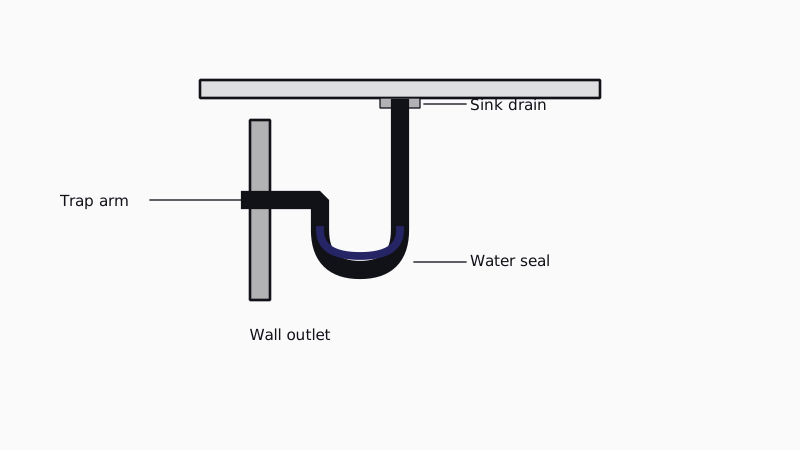
Begin with the parts you can see. Look in the sink for standing water, feel for a plug of food in the strainer, run the disposal, then set a bucket down and unscrew the trap under the sink to see whether it holds sludge. A clear trap with water still lingering means the restriction is downstream.
A short checklist you can do in order:
- Clear the strainer and flange. Take out any food bits, then let hot water run for a minute.
- Test the disposal. A unit that hums without spinning should be switched off and freed with the hex socket underneath, following the label on the unit. Never reach inside with your hand.
- Pull and clean the trap. Bucket under, slip nuts off by hand, tip out the sludge, rinse and reassemble. Check that the trap arm slopes slightly down to the wall.
- Check the dishwasher hose. Look for kinks, and for an air gap or high loop that keeps drain water from flowing back.
- Test other fixtures. Turn on the shower and the bathroom sink. If these are slow as well, write down which ones.
- Listen for gurgling. Bubbles or glugs while another fixture drains suggest trouble with a vent or the main line.
Avoid chemical drain cleaner in a slow sink. It can pool in a partial blockage, harm fittings and splash someone later when a plumber must open the pipe. A basic hand auger or a clear trap is safer; manual methods appear in clearing a kitchen sink drain.
Could a blocked vent be the cause?
Yes. Air enters behind the draining water through a vent. If it is blocked, drains run slowly, gurgle and sometimes release sewer smells. Vents sit on the roof, so checking one by eye is risky, and clearing it is a job for someone who works at height.
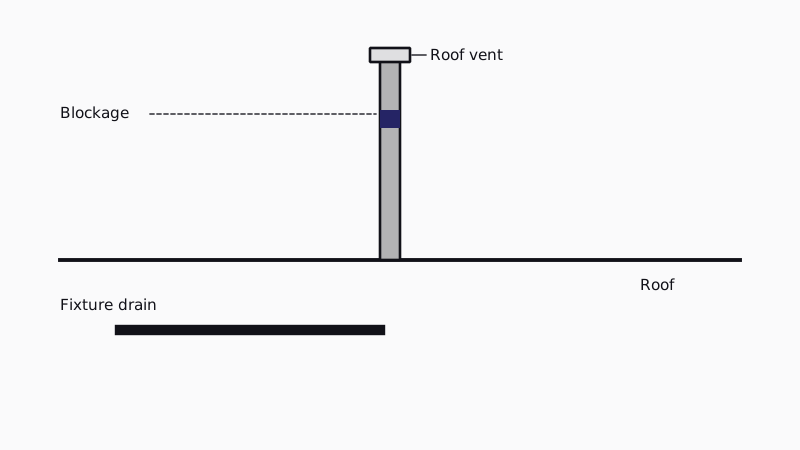
Signs that point to the vent: several fixtures slow at once, toilets that gulp when the sink drains, and a drain that works better with a window open. Pipes in older Rancho California tracts and in later builds all rely on vents, and a nest or debris can block one in any era. Do not climb up to look unless you are equipped and comfortable. A plumber can check the vent with a camera or by running water while watching from above. Building codes govern how vents are routed, so any change may need a permit from Temecula Building and Safety or the county.
What are the signs of a blocked main line or sewer?
When the kitchen sink is slow along with other drains in the house, or the lowest fixtures back up as upstairs ones empty, the obstruction sits in the main line or sewer lateral. A plunger cannot reach it, and it is not really a sink issue. Roots, grease and collapsed pipe are the common causes.
On a municipal sewer, the owner looks after the lateral running to the street, up to the connection point, and the district handles the main. In the Temecula area wastewater service comes from Rancho California Water District and, in certain parts, Eastern Municipal Water District, so ask your district where its responsibility begins. Homes on septic, found around Wine Country, Aguanga, De Luz and parts of Fallbrook and Rainbow, have a different reason for slow drains: a full tank or a failing leach field. If every drain is slow and the yard is soggy, call a septic service rather than a drain cleaner.
A plumber locates the restriction with a camera or a power auger. Say which fixtures are affected, so the visit begins in the right spot, and make the request on the quote page.
Could grease buildup be the real answer?
When a sink worked well for years and then worsened gradually, particularly if cooking fat goes down the drain, grease is a likely culprit. Hot water melts fat, but it sets again further down the pipe and builds a waxy lining. Once hardened, it will not clear with hot water alone.
Only mechanical cleaning clears it: a cable or a hydro-jet from a plumber, depending on the line. Afterward, change the habits. Use a paper towel to wipe out pans before washing them, collect fat in a can, and let the strainer catch scrapings before the dishwasher runs. Hard water in this area adds to the film. Rancho California Water District's 2020 to 2023 reports put average hardness around 230 to 240 mg/L, and the soap residue from hard water forms a scum that sticks to grease.
Should repeated slow drains worry me?
One slow sink is a nuisance. When a sink slows down again a few weeks after cleaning, it is telling you the pipe has a problem: a belly in the line where water pools, a bad slope, root intrusion or damage. In older homes, galvanized or cast-iron branches roughen inside and trap debris.
Cleaning again and again gives diminishing returns. Ask a plumber for a camera inspection if you have cleaned the same line more than once or twice a year. It shows the pipe's condition, and it costs less than repeated emergency calls. The ordinary slow sink is covered at a sluggish kitchen drain, and freeing a jammed disposal deals with the disposal itself.
Common questions
Why does my sink drain fast at first and then slow down?
Water leaves quickly while the pipe is full of pressure from the sink above, then slows once the water level drops and the narrowed pipe controls the flow. This pattern points to a partial restriction downstream, often grease, rather than a plug right at the strainer.
Is baking soda and vinegar good for a slow drain?
It fizzes and may loosen light film near the surface, but it does little against grease or a deep restriction. It is harmless, so you can try it, but it should not delay a proper cleaning if the drain keeps slowing down. A mechanical clear-out is the reliable fix.
Why does the sink gurgle during a dishwasher cycle?
The dishwasher drains into the same line, and the gurgle is air pulled through the trap because the vent or pipe is restricted. Suspect a vent fault or a partial blockage further down. Should the dishwasher leave standing water too, inspect the hose and the disposal plug.
Can a garbage disposal cause a slow sink?
Yes. A jammed unit, a clogged outlet or a stuck flapper restricts the flow, and food waste can pack the line behind it. Clear the disposal first, and be careful: never put a hand in, and turn the power off before using the hex key.
When is a plumber needed for a sluggish sink?
Call when several fixtures are slow, when the sink gurgles or smells, when clearing the trap and strainer achieved nothing, or when the problem keeps returning. All of these indicate the line beyond the sink, out of reach of hand tools.
This guide is one of many on plumber across Temecula.
Updated