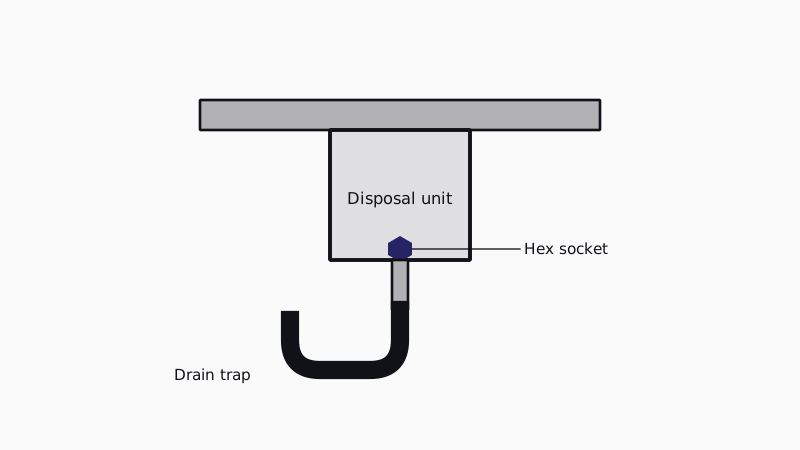
Shut the disposal off at both the wall switch and the breaker, then look into the sink. Water that stands there means the clog lies past the unit, while a humming unit that will not spin is jammed. Never put your hand in. Blockages that resist you belong under drain cleaning and clog work, which a local plumber can handle.
How do I tell a jam from a blocked drain?
Use your ears and eyes. A unit that hums without turning is jammed. One that spins freely while water sits in the sink is not at fault; the blockage lies in the trap or the pipe beyond it. Gurgling from the dishwasher or the second sink bowl also points to the drain.
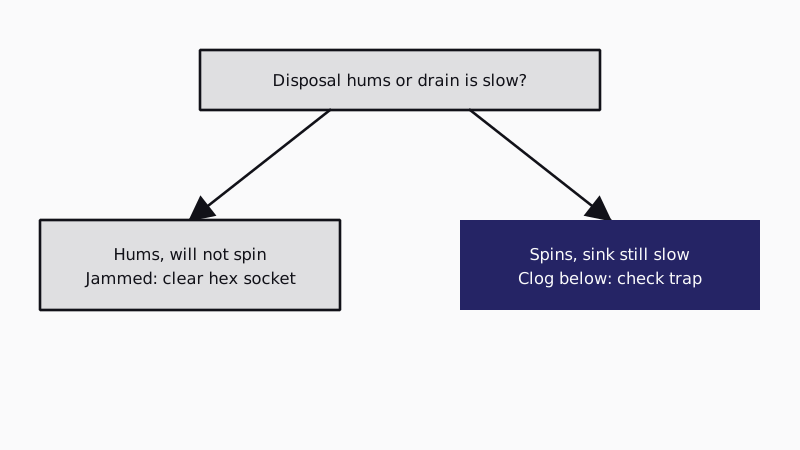
Sorting this out first saves work. A jam involves the grinding plate and is cleared from the unit itself. A drain clog lives in plumbing accessed through the cabinet underneath, typically at the trap or along the branch line. Many kitchens have both at once, because a jam holds food in the chamber and some of it washes down and sets in the pipe.
Check one more thing before touching anything: is the water draining slowly or not at all? Slow drainage hints at a partial blockage that will worsen, often grease and food film. No drainage points to a hard stop such as a solid lump in the trap.
Which signs say a disposal clog is beyond DIY?
Hire a plumber if the reset button keeps tripping, water leaks from the unit, you have plunged and snaked without success, other fixtures are slow or gurgling, or the sink backs up into another one. Those signs point to a main branch or sewer line problem, not just the kitchen trap.
When several drains back up together, stop using water and have a plumber look. A single stubborn kitchen clog is usually local, while multiple slow drains point to the shared line.
A disposal that needs replacing is also plumber work if the electrical connection or dishwasher hookup is unfamiliar. The guide on installing a disposal with a dishwasher connection explains the parts, and the related guide on a clogged sink drain covers drains more broadly.
To request a visit, fill in the quote form. The home page lists the other jobs we arrange.
How do I free a jammed disposal safely?
Cut power at the wall switch and the breaker first. Next, fit a hex key into the socket on the underside of the unit and rock the grinder back and forth until it spins freely. Push the red reset button underneath, restore power, and test with the water running. Never put fingers inside the chamber.
If you have no hex key, a wooden spoon handle pushed in from above can nudge the blades, with the power off. Pull out anything you can see with tongs, not a hand. Common jam culprits are bones, fruit pits, bottle caps and fibrous peels.
Water standing in the sink during this can be bailed out with a cup so you can see what you are doing. If the reset button pops out again straight away, stop. A motor that keeps tripping has a fault, and repeated resets can overheat it.
If the unit leaks from the bottom or a seam while you work, its seal has failed, and that usually means replacing the disposal rather than repairing it.
What stops the disposal drain clogging again?
Keep fats, oils and grease out of the sink, run cold water while the disposal works and for some seconds afterwards, feed waste in small amounts and skip fibrous or starchy foods in bulk, such as potato peels, celery, pasta and rice. A monthly flush with plenty of water also helps.
In Temecula, hard water compounds the problem. Rancho Water's reports put average hardness around 230 to 240 mg/L, roughly 13 to 14 grains per gallon, in the 2020 to 2023 reports, and mineral scale can narrow older drain lines and catch food residue.
Older homes in Old Town Temecula or the 1970s Rancho California tracts may have drains that run flat or have rough joints, which catch scraps more easily. If one kitchen sink clogs repeatedly, the cause may be farther down the pipe, and a camera inspection can show it.
How do I clear the clog beyond the disposal?
Start with a plunger, once the second bowl is plugged or the dishwasher line is held shut so the force goes down the pipe. Failing that, place a bucket below the trap, loosen the slip nuts with your fingers, empty the trap, and push a flexible drain snake into the wall pipe before putting everything back.
A cup plunger does best with a firm seal and a few inches of standing water in the basin. Push and pull rhythmically for about half a minute, and watch for the water to start moving. Plugging the other bowl or the dishwasher inlet stops the pressure escaping sideways.
Expect grease and slime when you open the trap. Wear gloves and keep rags handy. Check the washers when you put it back, hand tighten and run water to check for drips. Be gentle; plastic nuts crack.
A hand-cranked drain snake handles most kitchen branch clogs. Feed it into the wall pipe until you meet resistance, turn the handle to bore through and pull back whatever it grabs. If the snake keeps hitting the same place, the blockage may sit farther along, and that needs a machine.
Are chemical cleaners safe for a disposal clog?
No. Chemical cleaners can splash back, damage fittings and leave behind a hazard for the next person to open the trap, and they rarely clear grease balls. They can also harm a disposal's seals. Mechanical methods, hot water and a snake are safer, and a plumber has stronger tools.
Hot water alone is a poor tool for a fat clog, since the grease cools further down the pipe and sets. Dish soap with hot water can help melt a light film. Baking soda and vinegar fizz does little for a solid blockage, despite its reputation.
If a chemical cleaner has already gone down and failed, tell the plumber. They need to know before they open the trap or run a snake, because the liquid can burn skin and eyes.
Common questions
What does a humming disposal that will not spin mean?
A bone, pit or bottle cap has probably wedged the grinding plate. Switch off the power, slide a hex key into the underside socket and work the plate in both directions, then press the reset button. Keep it off until it turns freely.
Is plunging a garbage disposal sink okay?
Yes, provided the disposal is off and the other drain openings are blocked. Use a cup plunger with a flat bottom, with some water standing in the basin. Keep chemical cleaner out of the sink first, since plunging can throw it back at your face.
Why does the sink fill with water when the disposal runs?
Water cannot exit quickly enough, which signals a clog at the trap or further along the branch line. A dishwasher drain feeding into the unit can cause it as well. Switch off the power, check the trap and run a snake before trying anything stronger.
How often should a disposal be cleaned?
A quick weekly flush with cold water and a regular check for odors is enough for most kitchens. Grind citrus peel occasionally for a fresh smell, and never use bleach in quantity. If it smells and cleaning does not help, the trap or the drain may need attention.
Should an old disposal be repaired?
That depends on its age and the fault. Clearing a jam or a tripped reset costs little, but a leaking housing or burnt-out motor usually means replacement. A plumber can say which applies and write out the cost. Tell them the unit's age, its horsepower rating from the label and whether it hooks to a dishwasher, so the right parts arrive on the first trip.
Sources used
Updated