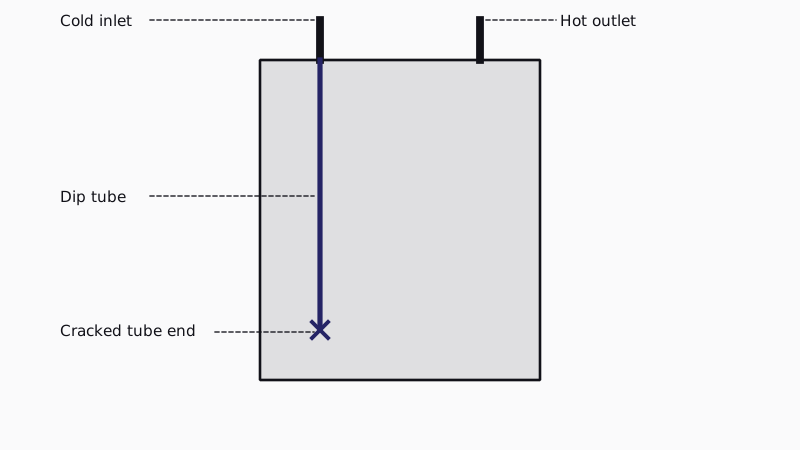
When only the hot side runs weak, suspect the water heater or the hot pipes, not the street supply. The usual culprits are sediment or scale blocking the outlet, a valve at the heater left partly closed, a clogged hot line or a flow-limiting part in a tankless unit. For a fuller list of heater faults, see the water heater repair overview.
What makes hot water weak while cold stays strong?
Cold water never passes through the heater, so a strong cold tap with a weak hot one means something is restricting the path from the heater to the faucet. Likely causes: a valve at the heater left half closed, scale and sediment plugging the hot outlet or leftover dip tube pieces, corroded hot lines, or aerators and cartridges clogged with scale, which builds first on the hot side.
Hot water carries more scale than cold, because heat makes minerals drop out of solution. Temecula's water is very hard: Rancho California Water District's own reports have put average hardness around 230 to 240 mg/L. That is why aerators, mixing cartridges and heater outlets here clog faster on the hot side than the cold.
Could the water heater's dip tube or outlet be the problem?
Yes, but in an unusual way. A broken dip tube mostly causes lukewarm water. The outlet side can clog when pieces of old plastic or scale fall into the heat-trap nipple or the top fitting of the tank. The result is reduced hot flow without any leak, and it often follows work on the plumbing, because debris stirs up.
A plumber can disconnect the hot outlet and look. If chunks of scale or plastic are inside, they can be cleared. The dip tube replacement page explains the part. When the tank is old, rusty or full of scale, replacement may make more sense than repair.
What should I check at the water heater?
Make sure the cold inlet valve, and the hot outlet valve if the unit has one, are fully open. Next, inspect the flexible connectors for kinks or collapse. Sediment is the next suspect: a hard-water tank can drop chunks of scale that block the outlet nipple. If the heater is a tankless model, check the flow sensor and the inlet filter screen.
If you shut a valve to inspect it, open it slowly. Do not remove parts from a gas or electric heater beyond what the manual allows. Shut off the power or gas before opening any connection. Should gas be present in the air, go outside, phone SoCalGas at 1-800-427-2200, and add 911 if you are in danger. A flush may restore flow if sediment is the cause, and the replacement timing guide explains when flushing is wise.
When is it a regulator or street-pressure issue?
If cold water is also weak, your house pressure is the question. A hose-bib gauge reading below about 40 psi, or pressure that sags while water runs, implicates the supply, the main valve or the regulator. The California Plumbing Code treats 80 psi as the maximum. Adjusting a water pressure regulator valve covers the test.
Does tankless change the answer?
It does. Tankless heaters have narrow passages and a heat exchanger that scales up in hard water, and many have flow sensors that require a minimum flow before the burner lights. A scaled-up unit can deliver a thin stream or a temperature that swings. Annual descaling is the usual preventive step.
If the unit shows an error code, write it down along with the model number. The error and the model together tell a plumber whether the cause is scale, a venting fault, a sensor or a gas supply. For a general comparison of formats see tank versus tankless.
Does the weakness affect one fixture or the whole house?
Run the hot water at several taps. If just one is weak, the fault lies in that fixture: an aerator, cartridge or supply line. Weak flow at every hot tap with normal cold points to the heater or the hot piping. If the cold side is weak as well, you have a whole-house pressure problem, and different checks apply.
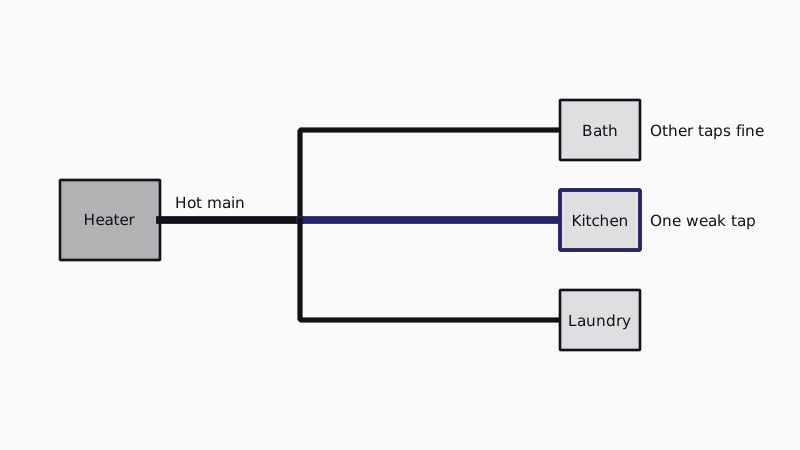
Here is a quick test. Take the aerator off the weak tap and run the water. If the flow jumps, scale was clogging the screen; soak the aerator in vinegar, then put it back. If the shower alone is weak, begin with the shower head or cartridge. A plumber would do the same test, so doing it first saves time. The whole-house case is on the low water pressure causes page.
What about low-pressure hot water heating systems?
If you mean a heating system, not a faucet, the picture is different. A hot water (hydronic) heating boiler has a pressure gauge, and a cold system commonly sits at around 12 to 15 psi, though your manual gives the correct figure. A low reading can mean a leak, a failed expansion tank or an open air vent.
Many homes heat with forced air rather than a boiler, so check which kind you have. If a boiler's gauge drops, do not keep refilling it: find the leak or call a heating professional. A boiler is separate from the domestic water heater that this page covers.
How can I get a plumber to look at it?
Give your address, the heater's type and age, and anything you have tried on the quote page. The request reaches local plumbing businesses, which pay us a fee, and one of them will contact you to book a visit. We answer calls Monday through Friday, 9am to 5pm. Our other topics are listed on the Temecula Pipe and Repair home page.
Common questions
Why is the shower the only place with weak hot water?
The shower is the likely fault: a clogged shower head, a scaled mixing cartridge or a restricted shower valve. Sinks have simple aerators and shorter pipes. Soak the shower head in vinegar, check the cartridge and compare against another hot tap. If the shower still lags, a plumber can open the valve.
Could the water heater be behind weak pressure?
Yes, on the hot side. Sediment, scale, a kinked connector or a valve left partly closed can all cut hot flow, while cold water stays normal. A heater rarely lowers cold pressure, so when both sides are weak, check the house supply or the regulator.
Will flushing the water heater fix low pressure?
Sometimes. If sediment is blocking the outlet or dip tube, flushing can clear it and restore flow. If scale has hardened or the lines are corroded, flushing will not help. With an old tank that has never seen a flush, go gently, because the drain valve may leak afterwards.
Does weak hot water pressure mean the heater is failing?
Not by itself. Age, rust in the water, leaks and rumbling are better signs. Low flow can come from a fixture or a pipe rather than the tank. A plumber can separate the causes with a pressure gauge and a look at the connections.
Do tankless water heaters have lower pressure?
A tankless unit slows flow slightly because water passes through a small heat exchanger, but you should not notice a big difference. A strong drop usually points at scale, a clogged inlet filter or a flow sensor fault. The unit's error code and a descaling flush are the first checks.
Sources used
- Rancho California Water District, water quality
- California Plumbing Code, section 608.2 (80 psi pressure limit)
Updated