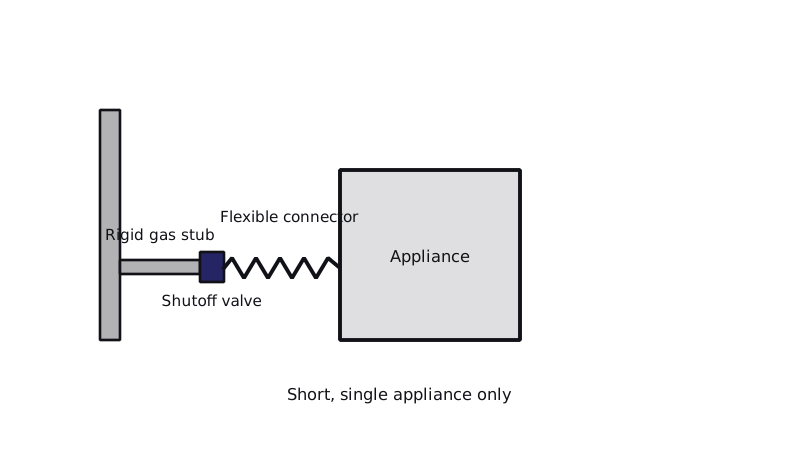
The 1/2 inch figure is a nominal size. At that size a flexible line can feed one small appliance over a short distance, but whether it is enough turns on how much gas the appliance draws and how long the run is. Picking, sizing and joining gas piping is a plumber's job. The full gas line plumber service page explains how we set that up.
What job does a 1/2 inch flexible gas pipe do?
Most often it is a stainless steel appliance connector: a short, bendable, hose-like piece joining a rigid gas stub to a stove, dryer or water heater, so the appliance can move a little. The same size is also sold as corrugated tubing for longer runs inside a building, which is a different product with different rules.
A connector is built for one appliance and a short length, so it should never be used to carry gas across a room or through a wall. A connector that has been bent sharply, kinked, stretched or reused on another appliance should be replaced. Most makers say not to reuse one after the appliance has been moved.
Flexible tubing for longer runs, often called CSST, is installed in some homes in place of black iron. Makers publish sizing tables and installation rules, including bonding the system for electrical safety, and a plumber follows them. The size only means something with the total gas load and the pipe length.
What kinds of pipe are allowed for natural gas?
Inside a building, installers mostly choose black iron (steel) pipe or corrugated stainless steel tubing. Outdoor and buried runs call for coated steel, or polyethylene made specifically for gas. Copper and galvanized pipe are not the default choice for gas, and the allowed material depends on the code and the gas company.
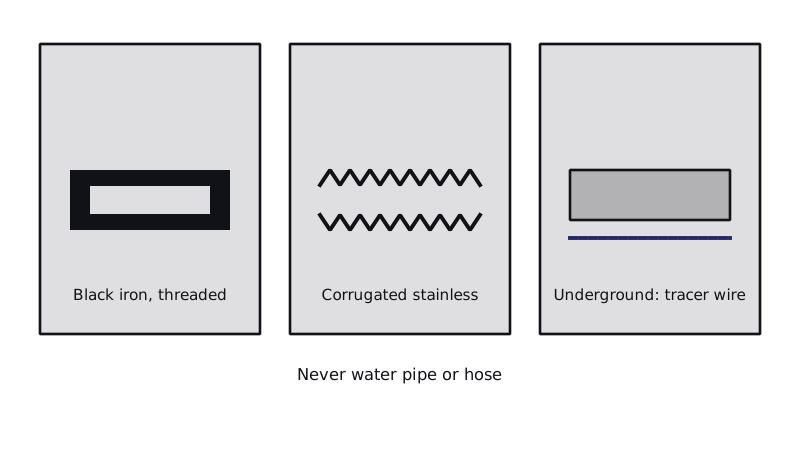
Each type needs the right fittings. Black iron uses threaded joints sealed with a compound rated for gas. CSST uses the maker's own fittings and a specific method. Plastic underground pipe uses special fittings and tracer wire in many installations, so locators can find it.
Never use plain plastic water pipe, garden hose or a fitting without a gas marking. Any of these may leak or fail, and escaping gas brings a risk of explosion and fire. Unsure what runs inside your walls? A plumber can identify it.
Which code applies to an outdoor gas line?
Codes address outdoor gas lines, covering material, protection from damage, support, distance from openings, a shutoff and a test, but we have not read the current text and will not quote specifics. The plumber follows the adopted code, the city or county issues the permit and an inspector checks the work.
For a line outside the building, a few points generally hold. The pipe must suit the outdoor environment and be protected from impact and corrosion. The route has to avoid places where it could be crushed or where gas could collect. Runs on the house wall are supported and secured.
The right office depends on the property's location. Permits inside Temecula are handled by Building and Safety, 41000 Main Street (951-694-6439). Riverside County serves unincorporated parts of Wine Country, French Valley and Winchester. For Fallbrook, Rainbow and De Luz, the office to contact is San Diego County Planning and Development Services. Check which one covers your parcel.
What burial depth does a home gas line need?
The minimum depth changes with pipe material, site and the code in force locally, which is why no figure appears here. The plumber and the local building office confirm the depth for your yard, and an inspector verifies it before anyone fills the trench. Never dig near a gas line yourself.
Call before you dig. California requires you to contact the regional underground service alert center, which can be reached by dialing 811, before digging, so that buried utility lines are marked. The utility marks its own lines up to the meter, and a private locator may be needed for lines beyond it.
Trenching for a gas line to a barbecue, pool heater or detached garage is a plumber's job, often with a permit. The pipe must be bedded, tested and left open to inspection before backfill, which is why it matters.
How are gas lines handled for a manufactured home?
Manufactured homes and parks follow rules of their own. The home itself is built to a federal standard, while the site connection, the riser and the gas service follow local code and the gas company's requirements. A plumber with experience in manufactured homes should do the connection, and a permit is usually needed.
Ask the park or owner who owns the line up to the home, because responsibility can differ. You will see flexible connectors at the appliance itself, not along the pipe beneath the home. Never move or reconnect a manufactured home's gas yourself.
Rural homes on propane instead of natural gas, such as many in Aguanga, De Luz and rural Fallbrook, face different regulations, and a propane company is often involved. Natural gas is our subject here; for propane, ask the plumber and the supplier.
Which flexible gas line problems need a plumber?
Get one if a connector is kinked, rusted, aged or the wrong size, if you are adding an appliance, relocating a stove or running a new line, and in every case where gas can be smelled. With a suspected leak, step outside before anything else, then call SoCalGas at 1-800-427-2200. If anyone is in danger, dial 911.
Check a connector visually for rust, cracks, kinks or yellow-brown staining. Soapy water brushed on joints reveals leaks as bubbles, but use it only with no gas smell present, after turning the appliance off.
The plumber can also pressure-test the line, which is what permit inspections examine. You can book a visit through the quote form, and the other jobs we cover are on the home page.
Common questions
Can I swap a gas appliance connector on my own?
Some homeowners do, but gas fittings are regulated and a mistake can leak. If you go ahead, shut the appliance valve, fit the right connector, check for leaks and stop at any gas smell. A new run or a moved appliance calls for a permit and a plumber.
Does California allow flexible gas line?
Flexible appliance connectors are widely used, and corrugated tubing goes into homes as well, under the adopted code and the maker's instructions. Local rules differ, so ask the plumber and Building and Safety whether it is accepted for your job.
What length can a 1/2 inch flexible gas pipe span?
That depends on the product and the appliance load. Connectors are built short, and CSST runs are sized from the manufacturer's tables. Never stretch either past its listed length. Ask a plumber to size the line for all connected appliances.
Does an outside gas line need a permit?
Typically yes, since this is gas piping, and the inspection happens before the trench is covered. For addresses in the city, the City of Temecula Building and Safety counter, 951-694-6439, can explain the process. Beyond the city limits, the county covering your address issues permits.
What should I do if gas smells strong near a buried line?
Move away at once, then phone SoCalGas at 1-800-427-2200 once you are clear of the area, and dial 911 when someone is at risk. Do not dig, strike a flame or flip switches close by. The utility makes the area safe, while any pipe repair on your side of the meter falls to the plumber.
Updated